Why Candidates Withdraw After a Good Interview
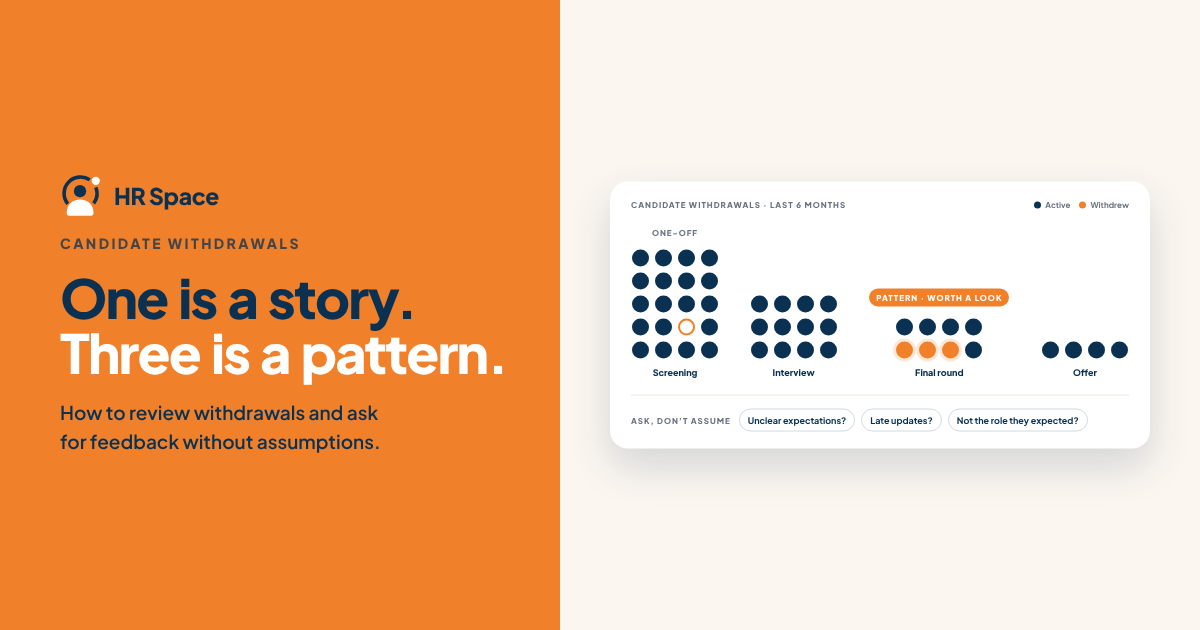
Remember that a good conversation is only one part of the decision
A candidate can enjoy meeting the team and still discover that the role does not suit them. The schedule may be difficult, the responsibilities may differ from the advert, or a personal priority may change.
Keep those possibilities open. Positive interview feedback tells you something about the conversation. It does not confirm that every practical question has been resolved.
Before arranging another stage, ask whether the person has the information they need to decide whether continuing makes sense. Give them a genuine opportunity to raise uncertainty, including something the team has already discussed.
Workable's candidate-experience guidance emphasizes clear expectations, respectful use of time, and timely follow-up. Those are useful areas to review when a process that felt positive ends unexpectedly.
Reply without turning the exit into another task
Acknowledge the decision and thank the person for their time. If feedback would help, make the request optional and easy to answer. Avoid asking them to defend their choice or join another call before you will close the process.
A short response might say: “Thank you for letting us know, and for the time you spent with the team. If you are comfortable sharing, was there anything about the role or process that influenced your decision? A brief reply is welcome, but there is no obligation.”
Adapt the language to the relationship. If someone has already explained their reason, do not send a generic request asking them to explain it again.
Review the last meaningful contact
Look at what happened before the withdrawal. Check the actual messages and dates rather than relying on everyone's memory of how quickly the team responded.
Was the next stage explained? Did the responsibilities change? Did an assessment require more work than the invitation suggested? Was the candidate waiting for an answer to a practical question?
Also review what was promised. A recruiter may have said the decision would arrive on Thursday while the hiring manager expected to review feedback the following week. The candidate experiences the missed commitment even when the internal misunderstanding was unintentional.
Keep reasons separate from assumptions
|
Situation |
What the record can say |
What to avoid assuming |
|
Candidate states a reason |
Record their explanation neutrally |
A different hidden motive |
|
Candidate gives no reason |
Reason not provided |
Lack of interest or professionalism |
|
Timing overlaps another offer |
Note only what was confirmed |
Pay was necessarily decisive |
|
A process issue is mentioned |
Record the specific issue and stage |
One change would certainly have secured the hire |
|
The role changed |
Note what changed and when it was explained |
The candidate accepted the revised brief |
This distinction matters when the team later reviews patterns. Guessed reasons can make a report look complete while pointing the discussion in the wrong direction.
Look for a repeated point of friction
One withdrawal may reflect circumstances outside your process. Several people raising the same issue give you a clearer reason to investigate.
Review the stage, role, and actual feedback together. If people leave after learning the working arrangement, ask why that information arrives so late. If candidates mention an assignment, inspect the scope and instructions. If they mention silence, compare the update commitments with what was sent.
Avoid turning a small sample into a market-wide conclusion. Use it to identify a change worth testing in your own process. Keep the change specific enough that the team can tell whether it was implemented.
Close the workflow as carefully as the conversation
Update the application status, cancel unnecessary interviews, and tell the people who were preparing for the next stage. Check scheduled messages so the candidate does not receive a reminder after withdrawing.
If future contact would be relevant, ask rather than treating it as automatic. A person may be happy to hear about a different opportunity later, or they may prefer no further approaches. Record the preference using your team's agreed process.
Give any internal improvement an owner. “We should communicate better” is difficult to carry out. “The recruiter will explain the assignment scope before scheduling it” tells someone what to change.
FAQs
Should we ask why a candidate withdrew
You can invite optional feedback respectfully. Make the request easy to decline and do not require another meeting. If the person has already explained the decision, acknowledge what they said instead of repeating the question.
Does withdrawal mean the interview went badly
No. A positive conversation can be followed by a decision based on practical terms, changing priorities, or another opportunity. Examine confirmed information before assigning a reason to the outcome.
How should withdrawal reasons be recorded
Use neutral wording and separate the person's explanation from an internal observation. If no reason was given, say so. Avoid converting a recruiter's guess into a confirmed reporting category.
What should change after the review
Choose a specific action supported by the evidence, such as clarifying a working arrangement earlier or setting a realistic update date. Name an owner and check that the action happens in the next process.
Review one recent exit this week
Read the messages leading up to the withdrawal and identify one unanswered question. If you are exploring HRSpace Recruiting, ask how your team would keep candidate updates and status changes aligned through this scenario.
Further reading
Ready to make HR the easy part?
Explore modular pricing and start a free 14-day trial.