Recruitment Intake Meetings That Stop the Brief Changing Mid Search
Ask the manager what is happening today that this person should change. A team might need someone to reduce an unresolved support queue, own a customer segment, or take responsibility for a recurring operational problem.
Then ask what the person should be able to do after settling into the role. “Strong communicator” becomes easier to assess when the manager explains who they will communicate with and what a successful conversation achieves.
Greenhouse's official guidance on role kickoff meetings starts with business objectives, the qualities required for the role, and hiring responsibilities. Use those areas as a starting point, then adapt the discussion to the vacancy in front of you.
Avoid describing the ideal person before agreeing on the job. Otherwise, a familiar employer name or a preferred career path can take the place of a requirement nobody has examined.
Ask which requirements can change
Have the manager explain why each essential requirement matters. If a particular tool is named, ask whether the person must use it independently on their first day or could learn it with support.
Separate the work that needs immediate competence from the knowledge the team can teach. Also identify preferences that would be useful without being necessary. This gives the recruiter a clearer basis for deciding whom to approach.
Write down the tradeoffs the manager is prepared to consider. Perhaps experience in a similar customer environment matters more than experience with the exact software. Perhaps location is fixed, while the start date has room to move.
These agreements prevent the recruiter from rejecting a plausible candidate over a preference that the manager would have been willing to discuss.
Turn broad labels into questions the team can answer
|
Briefing area |
Question to resolve |
Record to keep |
|
Role purpose |
What work needs a clear owner |
Main responsibilities and expected outcomes |
|
Essential skills |
What must the person already demonstrate |
Required evidence and why it matters |
|
Flexibility |
Which requirements can be learned or discussed |
Agreed tradeoffs |
|
Practical fit |
What arrangement can we actually offer |
Location schedule and approved pay framework |
|
Decisions |
Who reviews and who makes the final call |
Named owners and expected response times |
Keep this brief accessible to the people conducting interviews. It should remain useful when someone needs to check why a question or requirement is part of the process.
Agree on the interview plan while the brief is fresh
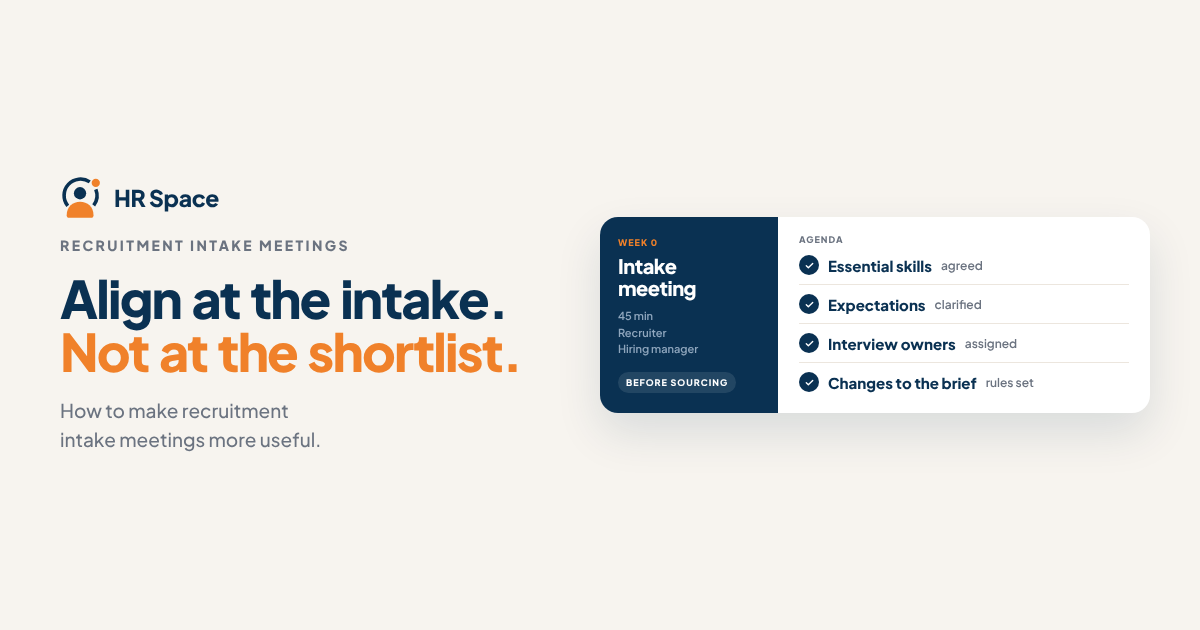
Give each stage a purpose. If two interviews assess the same thing, ask what the second conversation adds. If an essential responsibility has no assessment at all, decide how to explore it.
Assign interviewers according to what they can evaluate. A future colleague may be well placed to discuss collaboration on everyday work. A manager should be ready to explain priorities and assess the responsibilities they will supervise.
Agree on what feedback should contain. “Not senior enough” leaves the recruiter guessing. A note explaining which responsibility was not demonstrated gives the team something concrete to discuss.
Finally, name the decision owner and the person who communicates with the candidate. Those roles can belong to different people, but both need to be clear before the first invitation goes out.
Decide how changes to the brief will be handled
Some changes are justified. A client need may shift, a team structure may change, or early conversations may reveal that the original requirements were unrealistic. The problem is a change that remains invisible to everyone except one manager.
Date material updates and record who approved them. Review the advert, screening questions, interview criteria, and active candidate conversations together. A revised brief should not leave candidates preparing for a role the team no longer intends to hire.
If the change affects someone already in the process, explain the new information and let them decide whether to continue. Do not quietly introduce a new requirement in the final interview and describe it as something they should have known.
Use the first shortlist to check alignment
Review a small sample before building a much larger shortlist. Ask the manager to explain the strengths and concerns against the agreed brief. Look for differences in interpretation while they are still manageable.
If the feedback introduces a new requirement, return to its purpose. Is it essential to the work? Does it change the role or simply make an existing expectation clearer? Update the record accordingly.
Treat this as a check on the search design. It should help the team make a consistent decision, rather than turn each new profile into another version of the vacancy.
FAQs
Who should attend a recruitment intake meeting
Include the recruiter and the hiring manager. Add people who can resolve important questions about the work, budget, or assessment. A large meeting is unnecessary if the people present cannot make the required decisions.
What should the meeting produce
Keep an agreed brief covering purpose, required evidence, practical terms, interview responsibilities, and decision ownership. Write down unresolved questions with an owner so they do not become assumptions in the advert.
Can the brief change after advertising starts
Yes. Record the change, review its effect on the process, and communicate material differences to candidates already involved. The updated brief should be visible to everyone conducting interviews or reviewing applications.
How can we tell whether the meeting helped
Review the first shortlist against the original criteria. Notice whether feedback is specific and whether new requirements appear unexpectedly. Use that discussion to correct misunderstandings before the search expands.
Try this before the next vacancy goes live
Open the brief and ask two interviewers to explain the role in their own words. Resolve the differences before inviting candidates. If you are exploring HRSpace Recruiting, ask to see how the agreed role requirements would stay connected to the hiring workflow.
Further reading
Ready to make HR the easy part?
Explore modular pricing and start a free 14-day trial.