Recruitment Intake Meetings That Produce a Searchable Brief
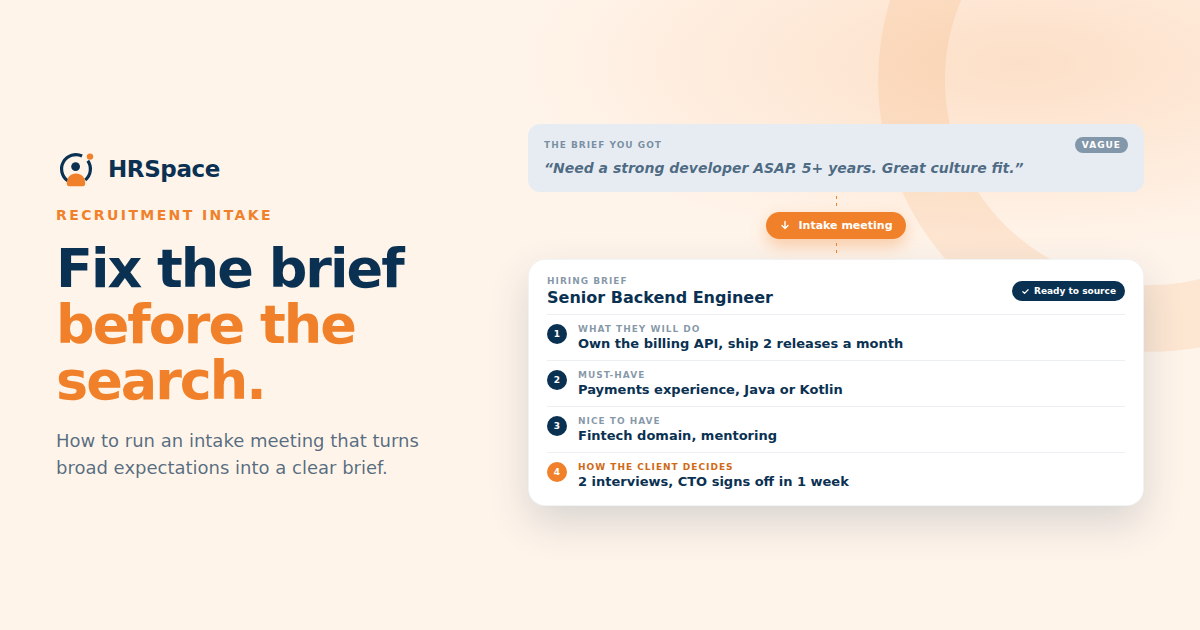
The intake meeting goes well. The client is friendly, the vacancy sounds interesting, and everyone agrees that the new operations manager needs to be strategic and hands-on.
Then you sit down to search. What does hands-on mean in this team? Will the person run daily operations, build a new department, or lead an expansion? Two weeks later, the client rejects your first profiles because they have never opened a regional office. That detail never made it into the conversation.
A useful recruitment intake meeting gets those details out early. By the end, you should be able to explain the work to a candidate, recognize relevant experience, and tell the client why someone belongs on the shortlist. The brief should help you make those decisions during the search.
Begin with the problem the hire will solve
Ask why the role exists now. A replacement hire, a new management layer, and a role created for an expansion can share the same title while requiring different experience.
Explore what is currently difficult and what the new person should change. If the client says the team needs stronger leadership, ask where that need appears in ordinary work. Are delivery dates being missed? Are responsibilities unclear? Does the manager need to hire and coach supervisors?
Ask the client to describe a piece of work the new person will own. If the answer is a rollout across three sites, you have something to explore in a candidate conversation. Bring strategic thinking leaves much more room for the recruiter, client, and candidate to imagine different jobs.
Ask about the first months in the role
You do not need a complete performance plan to start recruiting, but the client should be able to describe the early priorities.
Ask what the person will inherit, which decisions they can make, and where they will need approval. Find out whether they have a team, a budget, or external support. A candidate cannot assess responsibility accurately when accountability is described without the authority needed to carry it out.
Discuss what reasonable progress would look like after the person has had time to learn the business. Avoid promising immediate results from someone who will spend their first weeks gathering information or waiting for access.
Separate essential requirements from preferences
An intake meeting often produces a long list because every stakeholder adds something useful. The recruiter needs to understand which items genuinely change the hiring decision.
Ask what evidence could demonstrate each essential requirement. If the client requests sector experience, explore which knowledge makes it necessary. Some roles require familiarity with a particular environment; others may benefit from transferable experience in a comparable operating model.
For preferences, ask what the client would trade for stronger evidence elsewhere. This does not mean persuading them to lower standards. It means making the decision criteria clear before the first profiles arrive.
|
Intake topic |
Question to resolve |
Record in the brief |
|
Reason for hiring |
What problem should this person take ownership of |
Role purpose and early priorities |
|
Essential experience |
What evidence would demonstrate the requirement |
Requirement and acceptable examples |
|
Working arrangement |
Where and when must the person work |
Confirmed location and schedule expectations |
|
Compensation |
What range and approvals are available |
Current terms and unresolved approvals |
|
Decision process |
Who recommends and who decides |
Interview roles and final decision owner |
|
Search changes |
Who can approve a revised requirement |
Brief owner and version process |
Resolve practical conditions before sourcing
Location, working hours, travel, compensation, and start-date expectations can make an otherwise strong candidate unsuitable. Clarify them early enough to use them honestly in outreach.
If a salary range is awaiting approval, say that in the brief and agree what can be communicated. A recruiter should not present a provisional figure as a confirmed offer range.
Ask what hybrid looks like in an ordinary week. One office visit a month and four days on site can both appear under that label. Occasional travel needs the same attention. If you are going to use these details in outreach, you need to explain them without guessing.
Map who participates in the decision
Find out who will screen profiles, who interviews, and who can make the final decision. Include any person whose approval regularly changes the outcome, even if they join only at the end.
Agree what each interview is meant to assess. If every panel member repeats the same questions, the process can become longer without providing better evidence. A clear division allows one interviewer to examine technical delivery while another explores management responsibilities.
Also agree how feedback will reach you. Define a realistic response date, the required level of explanation, and who consolidates conflicting views. A search cannot move reliably if the recruiter is waiting for five uncoordinated opinions.
Make uncertainty visible
Some intake questions will remain unanswered. The organization may still be deciding whether the role reports to the director or the head of operations. Record that as an open decision with an owner.
Then ask whether the uncertainty prevents sourcing or only affects a later discussion. You may be able to begin mapping the market while reporting lines are finalized. You may be unable to approach candidates honestly if compensation and location are still completely open.
Keeping these decisions visible helps avoid filling the gaps with assumptions. It also gives the client a clear explanation when part of the search needs to wait.
Confirm the brief in writing
After the meeting, send back a short brief in plain language. Include the agreed requirements and the questions still open. Ask the decision maker to correct anything you have misunderstood. It is much easier to resolve a difference at this point than after you have approached twenty candidates.
Keep the document short enough to use. Separate the internal search notes from the candidate-facing description when confidentiality or context requires it. Both should reflect the same actual role.
Use a version date and explain subsequent changes. When the client adds a requirement after reviewing profiles, decide together whether to re-evaluate the existing candidates or start a different search. Quietly changing the brief makes it difficult to understand why earlier decisions happened.
Use the intake as a reference during the search
The brief should remain part of the working conversation. When a candidate is rejected, connect the feedback to an agreed requirement or document the new information that changed the assessment.
If the market is not producing suitable profiles, revisit the evidence. Are the conditions limiting the pool? Does the combination of responsibilities describe several jobs? Is a preference being used as an unspoken essential requirement?
Bring those findings to the client with examples. An intake meeting creates a starting agreement; the search can produce information that justifies revising it.
Evaluating the record in HRSpace
Take an anonymized brief to an HRSpace Recruitment demo. Ask how vacancy requirements and supporting documents would remain available to the people assessing applications.
If you run several client assignments, test that separation and the visibility rules. Confirm how revised information, interview ownership, and client feedback would be recorded in your proposed workflow.
Common mistakes in recruitment intake meetings
Finishing the meeting with a long list of qualities can feel productive while leaving the search unclear. Ask for examples of the work and confirm which requirements actually decide whether someone progresses.
Also check that the person approving the final hire agrees with the brief. An intake with someone who cannot settle the essential terms may need a follow-up conversation before you begin candidate outreach.
FAQ
What is a recruitment intake meeting
It is a discussion between the recruiter and the people responsible for hiring that establishes the role, assessment criteria, practical terms, and decision process before the search begins.
Who should attend the intake meeting
Include the person who understands the work and the person accountable for the hiring decision. Bring in other stakeholders when they can resolve a requirement that materially affects the search.
What if the client cannot agree on the requirements
Identify the disputed decisions and their owners. Agree which work can proceed and which candidate conversations need to wait until the terms are clear.
Should the recruitment brief change during a search
It can change when new information warrants it. Record the revision, communicate it to the team, and reassess affected candidates consistently.
Take one question into your next intake
Ask what the new hire should be able to take off the manager's plate once they understand the business. Listen for specific work, then check what authority and support the person will have. That answer often makes the rest of the brief easier to write.
Ready to make HR the easy part?
Explore modular pricing and start a free 14-day trial.