Recruiter Workload When Every Vacancy Is Urgent
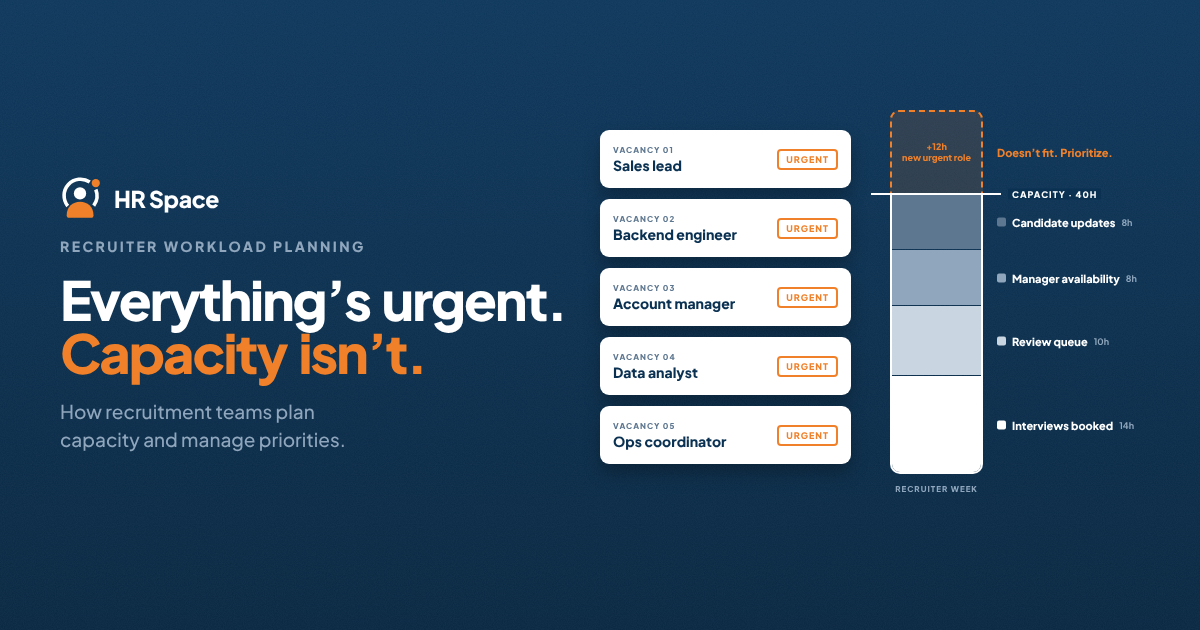
Look at the work behind the open role count
Separate sourcing, application review, candidate conversations, scheduling, feedback, and offer coordination. A role can require very different effort as it moves through those activities.
Include the work that does not appear neatly in a vacancy list. A recruiter may train a new manager, correct imported records, support an agency relationship, or cover a colleague's leave. Those responsibilities still consume capacity.
Ashby's research on recruiter capacity measures activity around the jobs talent professionals worked on during a week. Its approach is a useful reminder that a static list of assigned vacancies does not describe the whole workload. Do not turn a vendor's sample into a universal target for your own team.
Make a short view of the coming week
For each active role, identify the next meaningful action, its owner, and the timing already communicated. Include candidate commitments before adding speculative new outreach.
Use rough effort estimates where helpful, but label them as estimates. The point is to expose collisions and missing owners, rather than create a precise-looking forecast from incomplete information.
A recruiter with several final-stage conversations may need protected time for those decisions. Another may be ready to begin sourcing, provided the brief and approval are complete. Discuss what can move between people without losing candidate context.
Add known absences and interview availability. A recruiter cannot clear a review queue if the people needed for the next decision have no time allocated to it.
Review workload with a practical matrix
|
Work area |
What to inspect |
Decision it supports |
|
Candidate commitments |
Promised updates and booked stages |
Protect time for work already agreed |
|
Review queues |
Applications or feedback awaiting action |
Assign review or resolve the dependency |
|
New searches |
Brief readiness and sourcing effort |
Decide what can realistically begin |
|
Coordination |
Interview capacity and approvals |
Escalate work another owner must complete |
|
Team availability |
Leave, cover, and other responsibilities |
Rebalance before commitments are missed |
Keep the view small enough to review regularly. A detailed planning sheet that nobody maintains will soon become less useful than a short, current conversation.
Prioritize with the business instead of inside the inbox
Ask the relevant leaders to make the tradeoffs visible. If two roles cannot receive the same attention immediately, agree which work takes priority and what changes for the other search.
Use concrete consequences. Starting a new campaign may delay reviews for candidates already waiting. Adding interview stages may require more manager time. Explain those effects before accepting a new deadline.
Distinguish real deadlines from a general preference for speed. A confirmed start requirement may justify a particular sequence. “Urgent” on every request does not tell the team which commitment to protect first.
Record the decision and communicate it to the people affected. Recruiters should not have to renegotiate priorities privately with each hiring manager throughout the week.
Resolve the bottleneck that belongs to someone else
Look at the oldest waiting items and identify who can actually move them. A recruiter may be chasing feedback that a manager has not written or waiting for an approval they cannot grant.
Give those dependencies an owner and an escalation route. Sending additional reminders is unlikely to resolve a missing decision rule. If the manager is unavailable, agree on cover or revise the timeline.
Also review unnecessary work. Repeatedly copying notes, answering the same unclear process question, or arranging interviews before the brief is ready can consume time without advancing the decision.
Improve a specific recurring task before adding more volume to it. Check the effect in your own workflow rather than assuming an automation will remove every part of the effort.
Set a capacity agreement the team can review
Agree what can be delivered with the current people, role mix, and interview support. State the assumptions so the plan can be revisited when activity changes.
Use early warning signs, such as overdue candidate updates or a growing unassigned review queue, to trigger a discussion. Avoid waiting for several missed commitments before adjusting the plan.
Revisit estimates against what actually happened. The purpose is to learn where planning was incomplete and make the next week more realistic. Treat workload information as a way to organize support and decisions, rather than a reason to compare people using an isolated activity count.
FAQs
How many vacancies should one recruiter manage
There is no useful universal number without the role mix and responsibilities. Examine search difficulty, stage activity, coordination, candidate commitments, and available support. Use your team's actual work to build and revise an estimate.
What should a workload review include
Review the next actions for active roles, work already promised to candidates, waiting decisions, and team availability. Identify which tasks the recruiter owns and which depend on managers or other teams.
What if every manager calls their role urgent
Bring the competing commitments to the appropriate business owners and agree on priorities. Explain the consequence for each search. Record the tradeoff so recruiters are not left to make conflicting promises privately.
Should automation solve the capacity problem
It can help with particular repeatable tasks. First identify the source of the work and the decision it supports. Missing approval authority, unclear briefs, and unavailable interviewers need explicit ownership as well.
Review the next seven days of work
Choose the commitments the team must protect and the dependencies that need escalation. If you are exploring HRSpace Recruiting, ask to see the records and task visibility your weekly review would require.
Further reading
Ready to make HR the easy part?
Explore modular pricing and start a free 14-day trial.