Project Handovers That Let People Take Their Leave
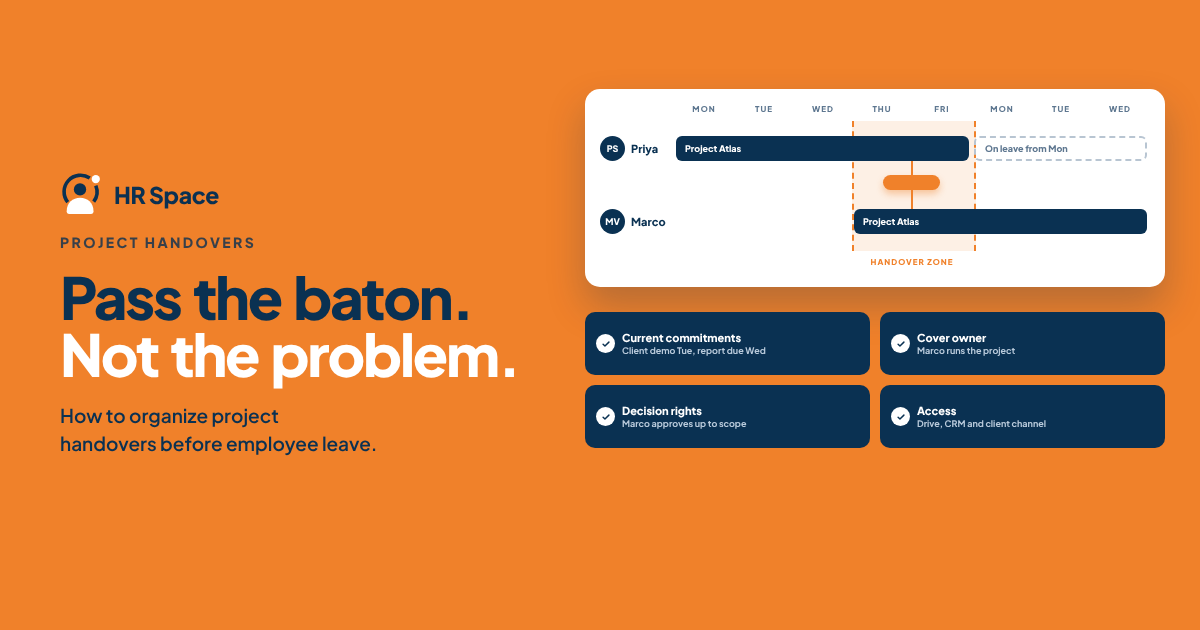
Start with the work that may move during the absence
A list of everything an employee has ever touched is difficult to use. Focus first on the work that could need attention while the person is away.
Imagine an account manager taking a week of leave during two active client projects. One project is waiting for a routine review. The other may need a decision about an additional delivery request. Those situations need different instructions.
For each active commitment, identify the expected event, its likely date, and the person covering it. Include recurring responsibilities such as a weekly client update if they still need to happen. Mark work that can safely wait until the employee returns.
In its out of office planning guidance, Asana recommends planning coverage and reassigning work due during an absence. The practical question is whether the new owner has enough context to act when that work arrives.
Make the next decision easy to understand
A handover should explain the decisions the colleague may face. “Keep an eye on Client A” leaves too much open.
Write the current position, the next expected input, and the relevant boundary. For example, the client is reviewing the agreed design. The covering lead can coordinate corrections within that scope; a new deliverable goes to the account director for a separate decision.
Link to the latest working documents and the recorded agreement. Identify the current version where confusion is likely. A folder containing five similar proposals is less helpful than a clear link to the one being used.
Explain the reason for any unusual commitment, especially when the obvious next action could conflict with an existing agreement.
Build a handover someone can use under pressure
|
Handover item |
Useful detail |
Check before leaving |
|
Active commitment |
Next event and expected date |
Does it need attention during the absence? |
|
Cover owner |
Named colleague and backup route |
Have they accepted the responsibility? |
|
Current position |
Latest status and working document |
Can the cover owner find the right version? |
|
Decision boundary |
What can be agreed and who handles exceptions |
Is the authority clear? |
|
Communication |
Who needs an update and when |
Do stakeholders know the contact? |
Size the handover around the work and decisions. A short table may cover a straightforward absence; complex delivery may need a more detailed plan.
Check capacity before assigning cover
Being available is different from having capacity. A colleague may be working that week and already committed to several deadlines.
Discuss the cover alongside their existing responsibilities. Which tasks might arrive? How much attention could they require? Who will decide if a client request conflicts with the covering person's own project?
If the cover is too large, reduce or redistribute it. A project lead may handle delivery decisions while another colleague sends routine updates. Keep the division clear so the client does not receive conflicting answers.
Resolve competing commitments before the absence so the covering colleague receives a clear priority.
Confirm that the colleague accepts the handover. Assigning a name in a document does not establish that they have read it, understood the decision boundary, or agreed to the dates.
Test the handover with a realistic question
Before the employee leaves, ask the covering person to work through a likely scenario. A client requests a new deadline. A review comes back with changes. A required input does not arrive.
Can the colleague locate the current information, identify their authority, and name the next action? If they have to ask the outgoing employee where everything is, improve the record while there is still time.
Check access through the organisation's normal access process. A link is useful only if the covering person can open the relevant material. Arrange the permissions needed for the responsibility without copying credentials into the handover.
Tell affected stakeholders who is covering the work and how to reach them. An internal plan will not help if every client message continues to go only to the absent employee.
Plan the return as well
Coverage creates new information. Decisions are made, dates move, and stakeholders ask questions. Keep those updates in the working record so the returning employee can understand what changed.
A return note should identify completed actions, open decisions, and follow up responsibilities. Transfer ownership explicitly where needed.
If a handover exposed a recurring problem, improve the regular workflow. A project that becomes understandable only after several hours of leave preparation probably needs clearer ongoing records.
HRSpace includes leave management and project work in its platform overview. When evaluating it, ask how your team would coordinate absence information with the responsibilities that need cover.
FAQs
When should a leave handover be prepared
Begin early enough to arrange cover and resolve likely conflicts. Update the details near the start of the absence so the record reflects current commitments and the latest decisions.
Does every absence need a detailed handover
Match the detail to the work that may need attention. A short absence with no active deadlines may need only a clear contact. A critical project with pending decisions requires more context and agreed coverage.
Who owns work during the absence
Name the responsible cover owner and define the scope of their authority. Where several colleagues share coverage, make the division and escalation route visible to the people involved.
What if the covering colleague lacks capacity
Raise the conflict with the responsible manager before the absence. Adjust deadlines, reduce commitments, or split coverage with clear ownership. Adding work without resolving priorities leaves the plan incomplete.
Test the next handover before the out of office reply starts
Use one upcoming absence in an HRSpace demo. Ask how the proposed setup would help colleagues find the cover owner, current work, and next decision.
Further reading
Ready to make HR the easy part?
Explore modular pricing and start a free 14-day trial.