Performance Reviews and Employee Recognition: How to Connect Them
Most companies run recognition and performance reviews as two separate things. Praise happens in chat or in meetings, and the review happens once or twice a year. By the time the review arrives, the manager has forgotten most of the good work from the first half of the cycle.
Connecting the two helps both. This guide covers how, what to keep apart, and how to do it in HRSpace, where goals, reviews and recognition sit in the same workspace.
Two different jobs
Recognition is quick, specific appreciation. It works best close to the moment: delayed praise loses its effect.
A performance review is a considered assessment of how someone is doing against expectations, with development plans and sometimes decisions attached. It is confidential.
They should inform each other, but they shouldn't merge. A thank-you isn't a rating, and a rating isn't a thank-you.
Why connect them
It reduces recency bias. Managers tend to remember the last few weeks. A record of recognition across the year gives them the earlier work back. Vendors who write about recognition and review integration make this point consistently.
It surfaces quiet contributors. People whose work happens behind the scenes get noticed less. Recognition from colleagues helps make it visible.
It avoids duplicate effort. Without a connection, HR reconciles notes from several places at review time.
Handle it with care
Recognition is an input, not a score. Don't count the number of thank-yous as a performance measure. It rewards visibility and popularity, not contribution.
Watch for bias. Loud, high-profile roles collect more praise. Check which roles and people are never recognised.
Keep reviews confidential. If recognition follows a review cycle, publish only an approved description of a contribution. Never publish ratings, compensation recommendations or private feedback.
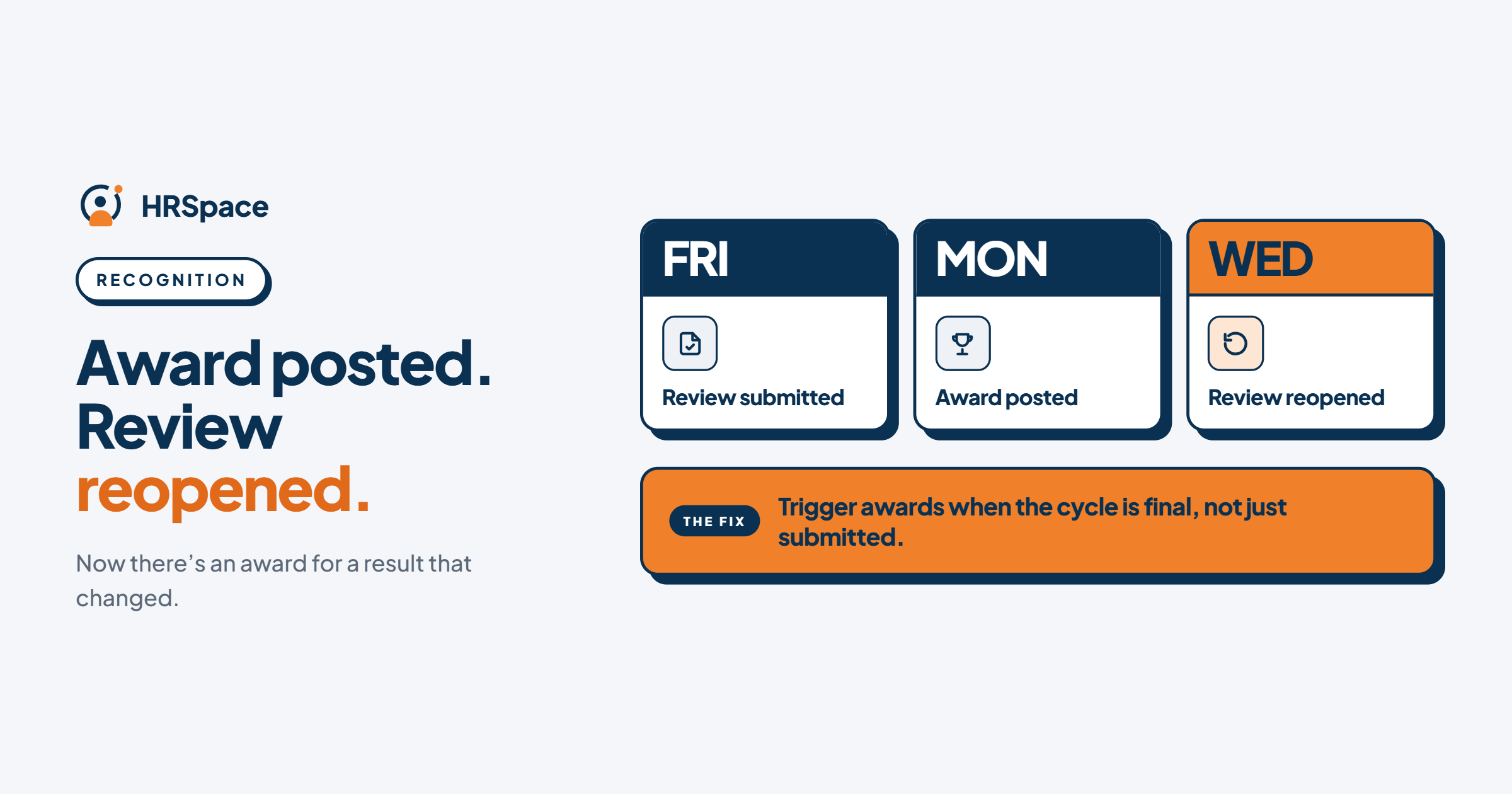
Don't award from submitted forms. Wait until review outcomes are final. Calibration and disagreements can change a result, and an award based on an unfinished result creates a correction problem.
A simple process
- Recognise through the year. Encourage specific, timely acknowledgements: what was done and why it mattered.
- Review the record before you write the review. Managers read the year's recognition and notes next to the agreed goals.
- Hold the review conversation. Use recognition as evidence, not as a verdict.
- Finalise outcomes before any end-of-cycle recognition.
- Run a deliberate thank-you round, if you want one. Pick contributions worth highlighting, get approval, write a short message about the contribution, and publish it. One recognition per contribution.
- Review the pattern. Who was recognised, who wasn't, and does it match the work?
If you automate part of this
Automation can help with reminders and routine steps, but set rules first:
- Trigger only from a finalised cycle, not a submitted form.
- One award per person, per cycle, per category.
- Use an approval step when wording or eligibility needs judgment.
- Keep review content out of the message.
- Check how it behaves if a cycle is reopened.
Confirm that your software supports each step before you rely on it. If it can't detect a closed cycle, keep an HR owner in charge of the release.
How HRSpace makes this easier
HRSpace keeps the pieces together:
- Goals & Performance ($1 per employee per month) covers goals with progress tracking, check-ins and review cycles, with AI-assisted drafting of goals and feedback.
- Recognition & Feedback ($0.66) gives colleagues a place to acknowledge contributions as they happen.
- Both sit in one workspace with employee records and time off, so managers aren't switching between tools when review season arrives.
You can start with one module and add the other later. Check, in a trial, how recognition appears when a manager prepares a review.
What it costs
For a 50-person company:
- Base layer (records, documents, time off, timesheets): $50/month
- Goals & Performance: $50/month
- Recognition & Feedback: $33/month
- Total: $133/month, billed monthly with no setup fee
A 14-day free trial needs no credit card.
Frequently asked questions
Should recognition affect performance ratings?
Don't use the number of acknowledgements as a score. Recognition can be one piece of evidence, interpreted by the manager.
When should recognition happen relative to a review?
Throughout the year, close to the work. A separate end-of-cycle round can come after outcomes are final.
Can we automate awards after a review cycle?
Only with clear rules: finalised results, approval where needed, no confidential content and one award per person per cycle. Check what your software supports.
What should never appear in a recognition message?
Ratings, compensation recommendations and private feedback.
How do we avoid recognition turning into a popularity contest?
Use specific criteria, review who is being recognised, and include behind-the-scenes contributors.
Can I try HRSpace before buying?
Yes, with a 14-day free trial and no credit card.
Where to go from here
To see goals, reviews and recognition together, start a free 14-day HRSpace trial. You may also like our guides to performance review software, recognition for sales teams and the 90-day review workflow.
Ready to make HR the easy part?
Explore modular pricing and start a free 14-day trial.