Job Offer Process for Small Businesses From Approval to Acceptance
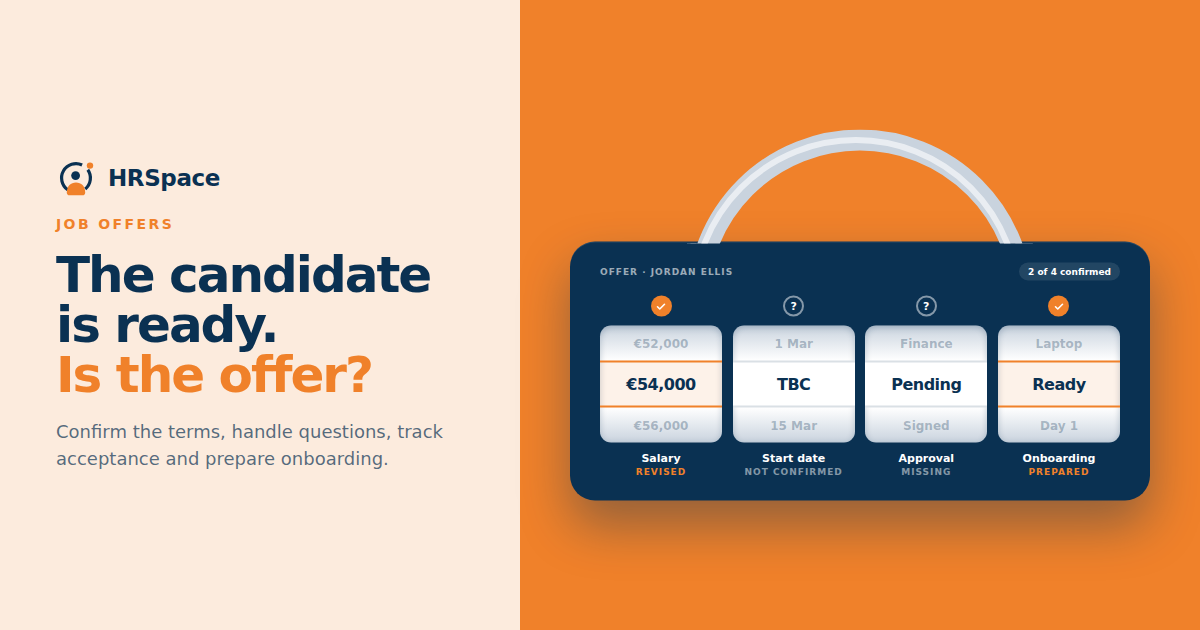
The manager says they have found the right person. You start preparing the offer, then discover that the range has changed, the proposed start date has not been discussed, and the person approving the terms is away.
The job offer process connects an internal hiring decision with an offer the candidate can actually consider. In a small business, that connection often involves a manager, a company owner, and the person coordinating HR.
Agree the details and approval route before sending the offer. You can then answer questions accurately, distinguish interest from confirmed acceptance, and give onboarding a dependable starting point. This guide covers coordination; formal offer terms and documents should follow your organization's approved process.
Identify who can approve the terms
Name the person authorized to approve the offer and the information they need. The hiring manager may recommend a candidate without having authority to confirm every term.
Clarify how exceptions are handled. If the proposed compensation or working arrangement differs from the approved role, decide who reviews the change before it reaches the candidate.
Give the approval task enough context to avoid another round of basic questions. Include the role, proposed terms, start-date position, and any agreed arrangement that affects the offer. Keep candidate assessment details limited to what the approver needs.
Check the offer against earlier conversations
Review the details shared with the candidate during recruitment. If the offer differs, resolve the discrepancy before treating it as a routine document to send.
For example, a role advertised with two office days should not quietly become four in the offer. If the business genuinely needs a change, the candidate needs a clear explanation and an opportunity to consider it.
Record the confirmed position in the hiring workflow. Informal comments about training, flexibility, or a possible start date should not be presented as agreed terms unless they have been approved and accurately documented.
|
Offer process step |
Question to resolve |
Result to record |
|
Internal recommendation |
Who is the team proposing to hire |
Confirmed hiring recommendation |
|
Terms review |
Are the proposed details approved |
Current approved version |
|
Candidate discussion |
What questions or changes remain |
Open items and owners |
|
Offer delivery |
Has the candidate received the intended material |
Delivery status and next contact |
|
Candidate response |
What has the person actually confirmed |
Current response and remaining conditions |
|
Onboarding handover |
Which start details can the team rely on |
Confirmed and provisional information |
Have a clear conversation before or alongside the offer
Explain the main details and let the candidate ask questions. The conversation can help identify an issue before several people begin preparing for a start that is not yet settled.
Use accurate information. If you do not know whether a benefit or arrangement applies to this role, check with the authorized owner. A reassuring guess can become a commitment the company did not intend to make.
Tell the candidate who to contact about questions and when they can expect an answer. If the offer includes a response date, explain it clearly and handle requests for more time through the agreed decision owner.
Keep one current version of the offer
When terms change, update the approved document through the designated process. Make clear which version the candidate should review and avoid leaving several different versions circulating without explanation.
Check the recipient and the details before delivery. Names, role titles, dates, and working arrangements are ordinary fields where copying a previous document can introduce errors.
Use the organization's approved method for sending and confirming the formal material. The hiring coordinator should know where the current document and response are recorded, even when another person handles the delivery.
Give negotiation a defined route
A candidate may ask for a different start date, working pattern, or compensation package. Record the request accurately and take it to the person who can decide.
Avoid responding with an unapproved promise to keep the conversation moving. Tell the person you will check the request and agree a realistic point for the next update.
Once a decision is made, explain the confirmed position and update the relevant records. A revised term discussed on a call should not remain absent from the formal process or onboarding preparation.
Distinguish a positive reaction from acceptance
“That sounds good” may mean the candidate is interested and still needs to review the details. Define how your organization records acceptance and which steps must be complete before the team treats the start as confirmed.
Keep outstanding items visible. If the start date is provisional, say so. If a question remains with the manager, give it an owner. A single stage called offer accepted can hide those differences unless the record explains them.
Communicate according to the actual status. The team can prepare some tasks early, but people ordering equipment or planning the first week need to understand which details are settled.
Prepare for a declined offer too
If the candidate declines, ask whether they are comfortable sharing the reason. Record what they say without filling the gaps with assumptions.
The reason may point to an issue in the process, such as a working arrangement disclosed late, or it may reflect a personal choice outside the team's control. A single decline does not establish that the whole offer strategy is wrong.
Review the next decision for the vacancy. Another candidate may still be under consideration, or the brief may need a change. Do not treat the next person as an automatic replacement without checking their current interest and the team's assessment.
Hand confirmed information to onboarding
Once the agreed acceptance steps are complete, give the onboarding coordinator the information needed to prepare. Include the current role, manager, start-date status, location or working arrangement, and relevant approved commitments.
Keep recruitment assessment notes separate from routine onboarding information. The people arranging a laptop need the equipment requirement and date, not the candidate's interview evaluation.
If the start date changes, review the tasks that depend on it. Updating the hiring record may not update every calendar entry, equipment request, or welcome message. Have an owner confirm those changes.
Test the whole offer transition
In an HRSpace demo, ask how the proposed setup records an offer, candidate response, and the transition to onboarding. Confirm which document, approval, or signing steps need a separate process.
Try an example with a revised term and a provisional start date. The team should be able to understand the current position without opening a chain of messages and deciding which one is newest.
FAQ
What does a small business job offer process include
It includes approval of the proposed terms, accurate delivery, handling candidate questions, recording the response, and passing confirmed information to onboarding. Formal documents follow the company's approved process.
Who should approve a job offer
The person authorized by your organization to approve the relevant terms. Clarify the route for exceptions so the hiring manager and coordinator know when another decision is needed.
When should the team mark an offer as accepted
Use the acceptance steps defined in your organization's process. Record remaining questions or provisional information clearly rather than treating an encouraging conversation as a completed outcome.
What if the candidate asks for a different start date
Confirm the request with the relevant decision owner, then update the candidate and the current record. Review onboarding tasks that depend on the date once it is agreed.
Map the next offer before sending it
Write down who approves the terms, who talks to the candidate, and who confirms the onboarding handover. Check that each person knows the current information and their next action. Resolve the first unclear handoff before it reaches the candidate.
Ready to make HR the easy part?
Explore modular pricing and start a free 14-day trial.