Internal Recruitment Without Awkward Surprises
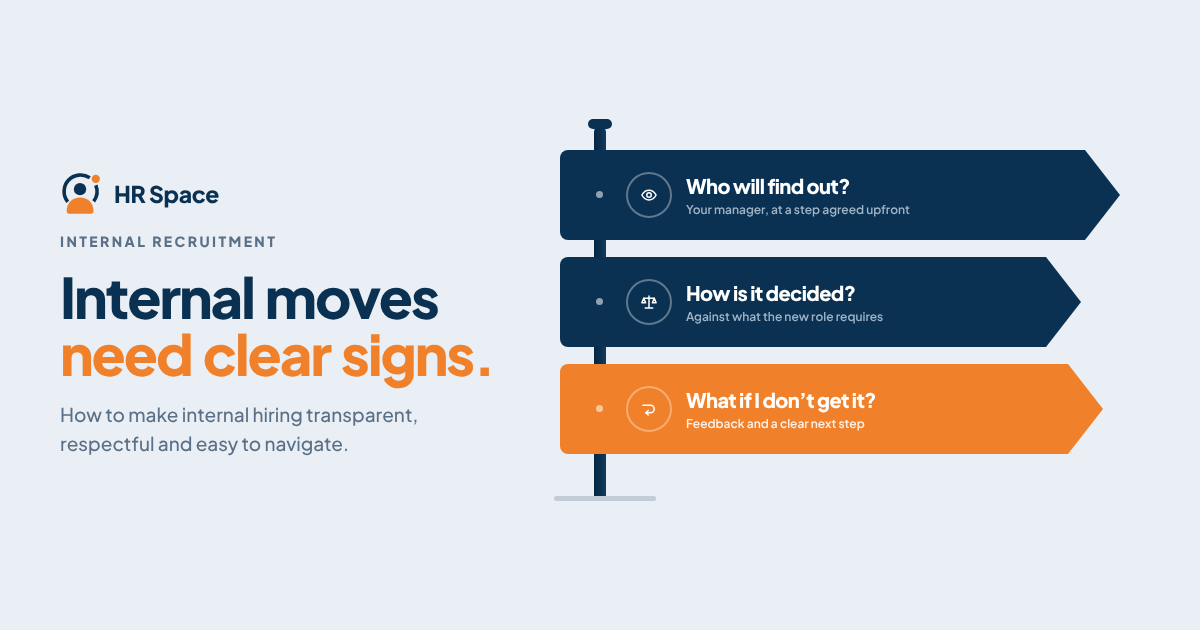
Publish the role requirements and the steps involved. Explain who reviews applications, when the current manager becomes involved under your policy, and where employees can ask a process question.
Be precise about visibility. Do not describe an application as confidential unless the access arrangements and internal rules support that description. Tell employees what the process can actually provide.
Teamtailor's official internal-recruitment guidance treats internal applications and their visibility as specific workflow concerns. Whatever tools you use, establish the access and communication rules before inviting colleagues to participate.
Employees should not need an informal conversation with the right person simply to understand how to apply.
Assess the new role rather than the existing reputation
A colleague's current performance may provide relevant evidence, but the next job can involve different responsibilities. Someone who is excellent at individual delivery may be applying for their first management position.
Define what the new role requires and decide how the employee can demonstrate it. Use relevant work examples, structured questions, or an appropriately scoped task. Explain which existing information the panel will consider.
Avoid filling gaps with familiarity. “We know them” can conceal both an unsupported positive assumption and an old impression that no longer reflects the person's work.
Give employees a genuine opportunity to explain their interest and development. Do not assume you already know why they want to move.
Make responsibilities clear
|
Process area |
Responsibility to assign |
What the employee should understand |
|
Application questions |
Named recruitment contact |
Where to ask about the process |
|
Assessment |
Hiring team for the new role |
Criteria and expected stages |
|
Manager involvement |
Owner under the internal policy |
When and how contact happens |
|
Decision |
Named decision maker |
Expected update and explanation |
|
Transition |
Current and receiving team owners |
Agreed handover after selection |
Adapt the matrix to your organization's policy. The point is to make the route understandable before an employee has to navigate it personally.
Prepare for a respectful no
Internal applicants will often continue working with the people who interviewed them. Give the decision enough care that the employee can understand the outcome without having to interpret silence or hallway comments.
Explain the role-related reasons you can support. If a development opportunity exists, describe it concretely and identify who can help. Avoid promising the next vacancy or implying a promotion is guaranteed after an arbitrary period.
Do not turn a rejection discussion into an unplanned performance review. If there are broader performance concerns, address them through the appropriate management process. The hiring conversation should explain the decision about this role.
Ask whether the person has questions and clarify who they can speak with afterward. A respectful close helps preserve an ordinary working relationship.
Plan the move after selection
Agree on a realistic transition with the employee and the relevant managers. Confirm the new responsibilities, start arrangements, and the handover work that needs an owner.
Avoid leaving the person indefinitely responsible for both jobs. If a temporary overlap is necessary, define its scope and review date. The employee should understand when the new role becomes their main responsibility.
Check what information should transfer to the receiving team. A successful internal move still needs context, introductions, and support. Being familiar with the company does not mean knowing every process in a new department.
Review the experience from the employee's side
After the process closes, ask whether the stages and communication matched what was explained. Invite feedback from selected and unsuccessful applicants without pressuring anyone to provide it.
Look for uncertainty you can remove before the next vacancy. Perhaps people did not know when managers would be informed, or the criteria were difficult to find. Give the improvement an owner and update the published explanation.
Internal recruitment becomes easier to navigate when employees can understand the process without relying on assumptions about access or influence.
FAQs
Should internal applicants follow the same process as external applicants
Use the same role requirements and relevant evidence while explaining any justified differences in the journey. Existing information may help, but familiarity should not replace an assessment of the new responsibilities.
When should the current manager be informed
Follow and clearly explain your organization's policy. Tell employees when involvement occurs and who communicates it. Do not make a promise about confidentiality that the actual process cannot support.
What should unsuccessful internal applicants hear
Give a timely explanation connected to the role and evidence. Where appropriate, discuss a realistic development action. Avoid vague promises about future promotion or turning the decision into an unexpected performance review.
Does an internal hire still need onboarding
They need a planned transition into the new responsibilities, team, and working arrangements. Identify what is already familiar and what requires support. Set clear ownership for the handover and any temporary overlap.
Make the route visible before the next opening
Ask a colleague to read the internal hiring explanation and describe who sees an application and what happens next. If you are exploring HRSpace Recruiting, ask the team to demonstrate your required access and communication arrangements.
Further reading
Ready to make HR the easy part?
Explore modular pricing and start a free 14-day trial.