How to Build a Candidate Shortlist a Client Can Use
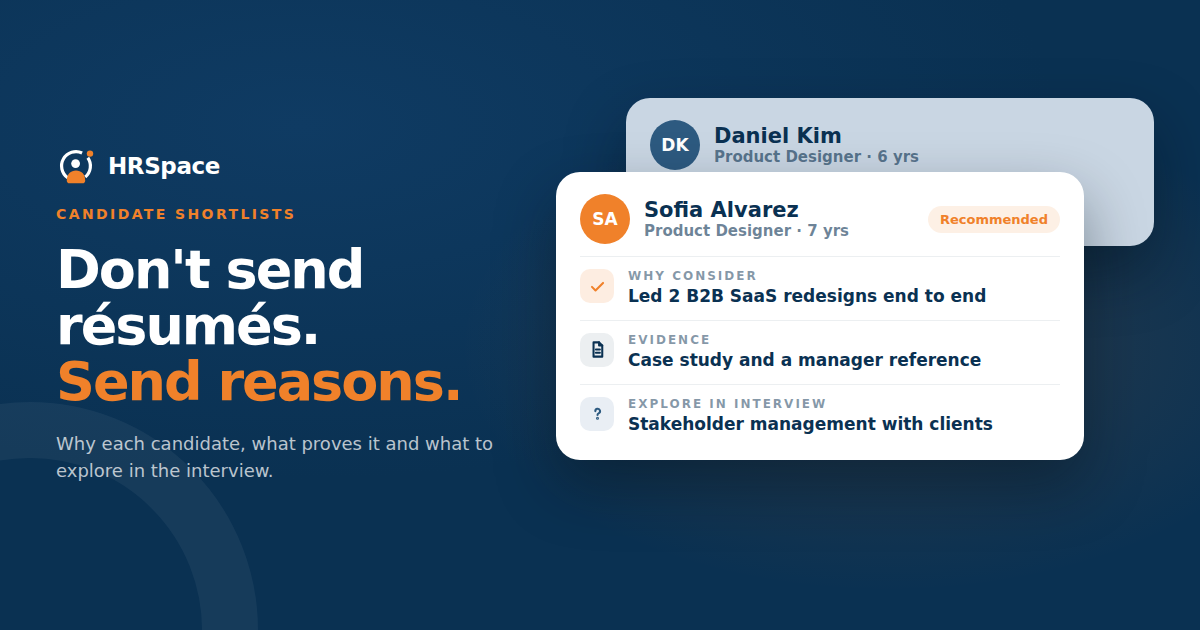
You've spoken to the candidates, checked their interest, and chosen the strongest profiles. You send the shortlist. A few hours later, the client asks which person you recommend and why.
The answer feels obvious to you because you had the conversations. The client has four résumés and a short email. They cannot see the example that impressed you, the concern you explored, or the reason one person's experience looks particularly relevant.
A good candidate shortlist closes that gap. It gives the client enough context to choose the next step without asking you to retell every screening call. It should also leave room for the questions that an interview still needs to answer.
Confirm what the shortlist is meant to achieve
Before selecting candidates, agree on what the client wants to decide. Sometimes the shortlist is intended to identify people for first interviews. In another search, it may support a decision between candidates who have already completed an assessment.
Those purposes require different information. An initial shortlist may need evidence of relevant experience and confirmed interest. A final comparison needs the interview findings, unresolved concerns, and any conditions affecting an offer.
Also confirm who will read the document. A founder who knows the role well may need a concise comparison. A panel joining the search later may need a short account of the business problem and agreed requirements.
Return to the brief before comparing people
Recruitment shortlisting becomes subjective when requirements change quietly. A client initially asks for someone who can manage delivery, then starts favouring candidates with business development experience. Profiles are being compared against different jobs.
Before preparing the shortlist, review the current requirements with the decision maker. Separate essential capabilities from preferences and identify anything that can reasonably be learned after joining.
If a requirement has changed, update the brief and reconsider every candidate against the new version. Avoid adding a new criterion only after meeting someone who makes it attractive. That makes both the comparison and the explanation to candidates harder to defend.
Use the same evidence structure for each candidate
A candidate shortlist template should make comparisons readable without flattening people into generic ratings. Use the same categories, then record the evidence in plain language.
|
Shortlist field |
What to include |
|
Relevant experience |
Specific work connected to the agreed requirements |
|
Evidence from screening |
Example discussed and what the candidate personally did |
|
Interest in the role |
Reason they are considering this opportunity |
|
Practical fit |
Confirmed working arrangement, availability, and compensation expectations |
|
Open questions |
Information that needs further assessment |
|
Recommended next step |
Interview focus or decision requested from the client |
Keep sensitive or irrelevant personal details out of the comparison. Include information because it helps assess the role or manage the process, and control who receives it.
Explain the recommendation with evidence
It is tempting to write strong communicator and move on. Ask what made you think that. Perhaps the candidate explained how they coordinated a delayed launch between engineering and support, including a difficult conversation about changing deadlines. A short account of that example gives the client something useful to examine.
You do not need to reproduce the entire conversation. Give the client enough context to understand the recommendation, then identify what should be tested next.
When evidence is incomplete, say so. A candidate may have managed a small team but not a department of the client's size. That can be an interview question rather than an automatic rejection, depending on the role. Presenting the gap clearly allows the client to decide with the right information.
Separate facts from recruiter interpretation
A résumé might state that someone led a regional expansion. Your screening conversation may establish that they owned one part of the project. Your interpretation could be that the experience transfers well to the client's planned launch.
Keep those layers understandable. Explain what the candidate reported, what you clarified, and why you believe it is relevant. A shortlist becomes less reliable when a recruiter's interpretation appears as an independently verified fact.
Similarly, describe compensation and availability as current information from a dated conversation. Candidate circumstances can change. Confirm important details again before they become the basis of an offer or a client commitment.
Decide the shortlist size from the decision
There is no useful universal rule that every shortlist should contain exactly three or five people. The number depends on how many credible candidates meet the brief and how much interviewing the client can realistically complete.
If you have two credible candidates, send two and explain where the search stands. Adding a third person you do not really recommend may make the document look complete, but it leaves the client to repeat the filtering you have already done.
If several candidates are credible, explain the meaningful differences. One may have deeper sector experience; another may have delivered a very similar operational change in a different industry. Help the client choose what to investigate, rather than presenting a ranking with no reasoning.
Give the client a clear feedback request
Before sending the shortlist, agree when the client can review it. A note saying thoughts welcome can easily turn into a polite reply that leaves every application open. Ask for the decision you need about each person and make the response date visible.
For candidates moving forward, request the interview focus and scheduling owner. For candidates not progressing, ask which requirement was not sufficiently demonstrated. If the client wants more information, identify the question so you can return to the candidate with a useful request.
Record the response against the relevant application. Feedback kept only in a forwarded email may be missed by another consultant or detached from a later version of the brief.
Keep document versions under control
A revised résumé can arrive after the shortlist is sent. A client may circulate the original comparison to another panel member. Without a clear version, people can enter an interview with different information.
Use a date or version reference on the shortlist and identify the candidate documents it accompanies. When something important changes, explain the change to the reviewers rather than silently replacing a file.
During software evaluation, ask which record is shared, whether access can be limited, and how updates appear to the recipient. A downloadable document and a live portal can behave differently; test the method your clients will use.
Where HRSpace can enter the process
Use an HRSpace Recruitment demo to examine how you would organize the underlying candidate applications for a shortlist.
Bring a sample brief and several invented profiles. Ask specifically about storing assessment notes, exporting or sharing the intended information, and controlling client access. Agency submission and shortlist-sharing requirements should be confirmed during evaluation.
Mistakes that make shortlists harder to review
Long biographies can hide the evidence relevant to the role. Keep the comparison focused and let the résumé provide the wider history.
Avoid unexplained percentages or star ratings. If you use a score, show the criteria and its meaning. A candidate described as an 85 percent match tells the client little when nobody can explain how that figure was produced.
Finally, do not promise that every candidate will accept the stated terms. Record what was discussed, acknowledge outstanding questions, and keep the conversation current as the search develops.
FAQ
What should a candidate shortlist contain
Include role-relevant evidence, confirmed interest, practical requirements, unresolved questions, and the next decision requested. Use a consistent structure for every candidate.
How many candidates should be shortlisted
Choose the number from the quality of the available matches and the client's interview capacity. Explain a smaller shortlist honestly rather than adding profiles that do not meet the agreed brief.
Should recruiters rank shortlisted candidates
Ranking can help when the criteria are explicit and comparable. A reasoned comparison may be more useful when candidates bring different strengths that require a client decision.
What if the client changes the requirements after submission
Confirm the revised brief, assess the existing candidates against it, and explain any change in recommendation. Keep the earlier version available so the history remains understandable.
Before you send the next shortlist
Read the comparison without looking at the résumés. Can you explain why each person is there, what still needs checking, and what you want the client to decide? If you need your memory to fill the gaps, add that context before sending it.
Ready to make HR the easy part?
Explore modular pricing and start a free 14-day trial.