Hiring Several People for the Same Role Without Losing Individual Context
Confirm what is genuinely shared
Check whether the vacancies have the same responsibilities, location, schedule, manager, and entry requirements. The same title can hide differences that matter to the candidate and the assessment.
Confirm the approved number of positions and who can change it. Identify any separate start groups or practical conditions that affect the process. Keep the plan current as offers are accepted or the business need changes.
Workable's high-volume-hiring guidance emphasizes agreeing on skills, evaluation, and responsibilities before increasing activity. That planning principle also helps a small business hiring several people for the same role, even when it would not describe the campaign as large-scale recruitment.
Avoid using one generic message to conceal unresolved differences. Clarify the arrangement before inviting people to invest more time.
Plan review capacity before publishing widely
Estimate the application and interview work the team is prepared to handle. Give each stage an owner, a response expectation, and cover for absence.
Reserve time for assessment review and decisions as well as interviews. A full calendar of conversations can create a queue of unanswered applications if nobody has time to review notes afterward.
Set a practical routine for checking the queue. Identify which candidates are waiting on the team, which are completing an agreed task, and which require an individual conversation.
Use estimates transparently and revisit them when volume changes. If the process cannot support the incoming work, adjust the campaign or staffing plan before repeatedly missing communicated dates.
Keep the group plan and individual action separate
|
Shared process item |
Individual information to preserve |
Check before acting in bulk |
|
Interview stage |
Actual invitation, timing, and attendance |
Everyone selected belongs at this stage |
|
Assessment request |
Completion, support needs, and questions |
No person is asked to repeat completed work |
|
Review queue |
Relevant evidence and reviewer ownership |
Each application has a clear decision route |
|
Candidate update |
Current status and previous communication |
The message is accurate for every recipient |
|
Start planning |
Confirmed terms and accepted position |
Numbers reflect actual commitments |
The shared plan organizes activity. Individual context remains necessary for both the hiring decision and respectful communication.
Use bulk actions with a specific check
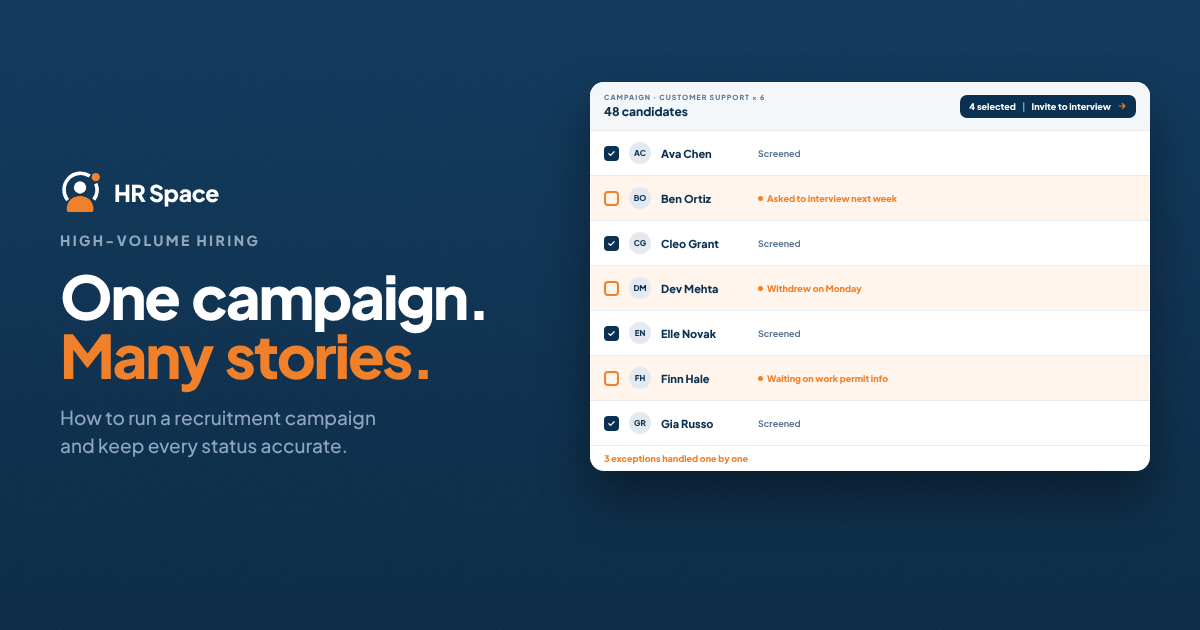
Before sending an update, filter the intended group and inspect the selected records. Check recent replies, withdrawals, completed tasks, and any exception that changes the message.
Preview the communication from the candidate's side. Does it explain what the person should do next? Is the deadline clear? Does a reply reach someone who will respond?
After sending, confirm that the action is recorded appropriately and that exceptions have an owner. A recipient count alone does not prove that everyone received the right information.
Where your tools automate a stage change or message, test the relevant conditions with fictional records before applying the workflow widely. Keep a way to stop or correct an action when the group changes.
Make room for an individual exception
Define how the team handles a reschedule request, an assessment question, or a need for an alternative arrangement. The recruiter should know who can decide and where to record the outcome.
Keep the essential assessment standard clear while explaining justified differences in the journey. A different appointment time should not cause someone to disappear from the review plan.
Avoid making candidates disclose more than is needed to resolve a practical request. Ask what arrangement is required and follow the organization's process for considering it.
Tell the person what happens next and update the relevant reviewer. The group process should continue without leaving the exception dependent on someone's memory.
Close the campaign with accurate outcomes
Track offers and accepted positions carefully so the business knows what remains open. Confirm who can communicate an offer and how changes to the required number affect people still participating.
Explain the outcome to remaining candidates through the appropriate owner. Do not leave applications active indefinitely after the approved positions have been filled.
If future contact would be useful, ask about it and keep the purpose clear. A person who completed this process should not be silently treated as committed to a different future vacancy.
Review the campaign afterward. Choose a specific improvement based on waiting times, review ownership, or communication problems the records actually show.
FAQs
Can everyone follow the same hiring process
Use a shared structure where the role and required evidence are genuinely the same. Preserve individual status and relevant exceptions. Confirm practical differences in location, schedule, or responsibilities before treating the vacancies as identical.
What should we check before a bulk message
Review the selected group for current stage, recent replies, withdrawals, completed work, and exceptions. Preview the message and confirm the reply owner. Every recipient should receive an instruction that fits their situation.
How should reschedules or other exceptions be handled
Use a clear route with an authorized owner, record the arrangement, and update the relevant reviewer. Keep the person visible in the review plan and explain the next step without requiring unnecessary personal detail.
What happens when all positions are filled
Confirm the accepted commitments and close the campaign accurately. Update people still in the process and handle any interest in future opportunities through an explained, appropriate follow-up arrangement.
Test a group update with one exception
Add a fictional withdrawn candidate and someone who has already completed the requested task. Explore HRSpace Recruiting with that scenario and ask how your proposed workflow would keep each next action accurate.
Further reading
Ready to make HR the easy part?
Explore modular pricing and start a free 14-day trial.