Hiring Freezes and the Candidates Already in Your Process
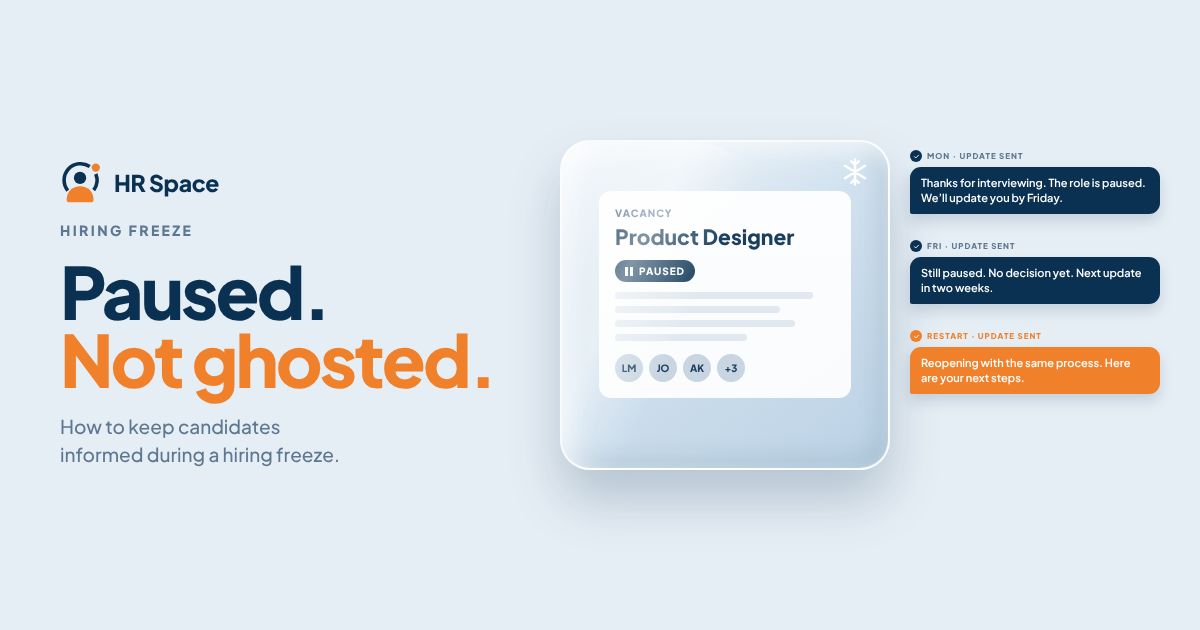
Establish what the pause means for this vacancy
Ask the decision owner whether the role is paused, cancelled, or awaiting a specific approval. Confirm which activities should stop, which may continue, and who can authorize a change.
A company-wide announcement may leave exceptions unresolved. One vacancy could remain approved while another cannot progress. The recruiter needs a role-specific instruction before contacting candidates.
Record the decision date and the person responsible for reviewing the pause. If no reopening date exists, say that internally. An estimated return date can easily become a promise when it passes through several conversations.
Workable's guidance on recruiting during a hiring freeze describes useful work the team can do while active hiring is restricted. That work should follow a clear decision about what happens to the current search.
Contact people before their next investment of time
Review upcoming interviews, assignments, and other outstanding requests. Prioritize candidates who are about to take time away from work, travel, or complete a task.
Send a direct update before changing or cancelling a calendar event. A disappearing invitation leaves the person to infer what happened. Explain the effect on their application and whether anything is required from them.
For example: “The company has paused recruitment for this role, so we will not proceed with Thursday's interview. There is no confirmed restart date. You do not need to complete the preparation task. I will contact you by [date] with the latest position, even if the role remains paused.”
Use that final sentence only if someone has accepted responsibility for the update. Keep confidential business details out of the explanation while remaining clear about the practical outcome.
Give each group an appropriate next step
|
Candidate situation |
Action to resolve |
Owner to name |
|
Interview booked |
Explain whether it will proceed or be cancelled |
Recruitment contact |
|
Assignment outstanding |
Confirm whether work should stop |
Recruiter and assessment owner |
|
Final decision pending |
Explain the pause and unresolved decision |
Hiring decision owner |
|
Offer already issued |
Obtain case-specific direction before communicating |
Authorized HR or offer owner |
|
Interested in future contact |
Agree how and when to reconnect |
Named relationship owner |
An issued or accepted offer needs attention through the organization's appropriate HR process. Do not assume that moving an application to a paused stage resolves the commitments already made.
Stop messages that no longer match the situation
Check interview reminders, assessment invitations, follow-up sequences, and public job listings. A careful personal update can be undermined by an automated request to book the next stage an hour later.
Review connected tools as well as the main recruitment record. Identify who will remove or update the advert and verify what candidates can still see on the public page.
Keep the status and the explanation aligned. If the role is cancelled, do not leave it labelled as temporarily waiting simply because that seems easier to communicate. If it is paused, avoid telling candidates that they have been rejected for the role.
Use a small fictional test where necessary to confirm how scheduled messages behave after a status change. Record the settings the team needs to revisit when hiring resumes.
Leave the candidate free to move forward elsewhere
An invitation to stay in contact should not imply that someone must remain available. Explain that there is no confirmed opportunity to accept until the relevant decisions are made.
Ask whether future contact would be welcome. A person may want an update if the role reopens, or they may prefer to close the conversation. Record the preference using the team's agreed process.
Avoid repeatedly asking whether they are still interested when there is no new information. Keep any agreed update useful: state what is known, what remains unresolved, and whether the next contact arrangement has changed.
Reopen the search with a fresh check
When approval returns, verify the brief before reconnecting. Responsibilities, reporting lines, working arrangements, and budget may have changed during the pause.
Tell the candidate what has changed and ask about their current situation. Their availability and priorities may also be different. Previous interest is a starting point for a conversation, rather than confirmation that the person can continue at the same pace.
Review existing assessment evidence for relevance. Decide whether a focused clarification is enough instead of automatically asking everyone to repeat the process. Give the restarted search a named owner and a realistic plan.
FAQs
Should we give candidates a reopening date
Share a confirmed date if one exists and you are authorized to communicate it. Otherwise, explain that timing is unresolved. An agreed update date can provide clarity without promising that recruitment will restart then.
Should scheduled interviews continue during a pause
Resolve that decision with the role owner before candidates spend more time preparing. Explain what will happen and why. Do not leave interviewers and candidates to discover different instructions on the day.
What if an offer has already been sent
Refer the situation to the authorized HR or offer owner for case-specific direction. Check the commitments already made and the applicable process. A general communication template should not decide that situation on its own.
What should happen when the role reopens
Confirm the current brief and practical terms, then check whether the candidate wants to reconnect. Explain relevant changes and review which existing evidence remains useful before requesting more assessment work.
Check the next calendar invitation
Choose a paused vacancy and follow the candidate's next expected action. If you are exploring HRSpace Recruiting, ask how your proposed setup would keep role status, scheduled messages, and candidate updates aligned.
Further reading
Ready to make HR the easy part?
Explore modular pricing and start a free 14-day trial.