Employee Referrals That Lead to a Fair Hiring Process
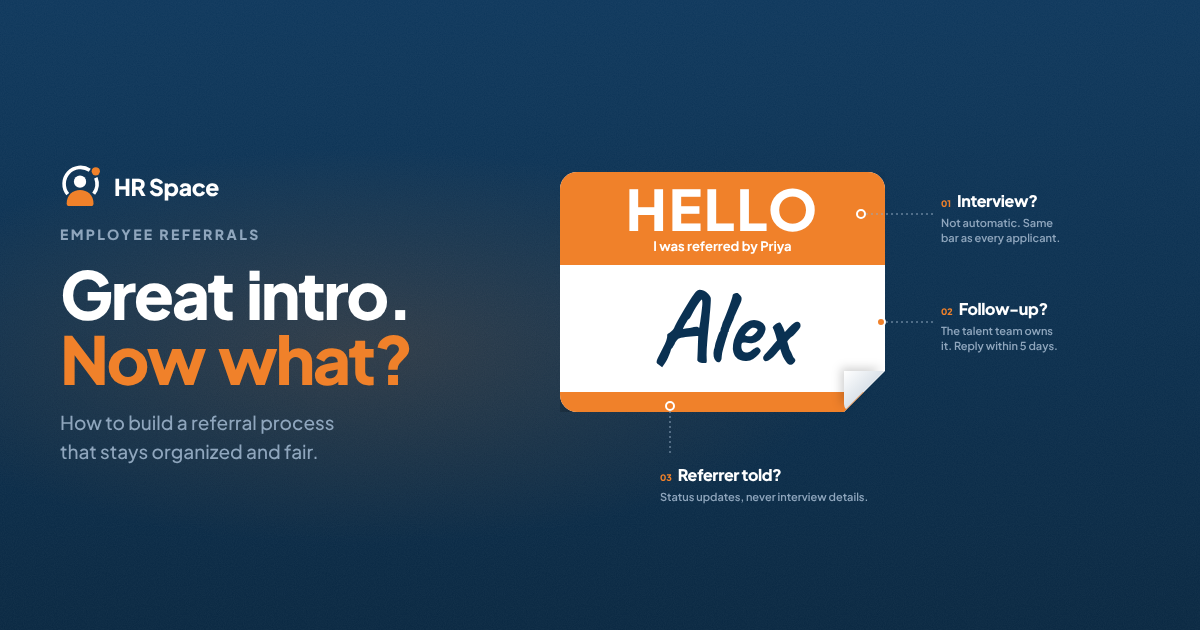
An employee sends a message: “I know someone who would be perfect for this role.” The introduction is welcome. The difficult part begins when the hiring team has to decide what the referral changes.
Should the person skip the first review? What can the employee hear about progress? Who contacts the candidate, and does the candidate know their details have been shared?
A useful employee referral process answers those questions before the next introduction arrives. Make it easy to recommend someone while keeping the assessment connected to the role and the candidate's experience clear.
Ask for relevant context
A recommendation becomes more useful when it explains how the employee knows the person and why their experience relates to the vacancy. “They are great” gives the recruiter little to assess.
Ask for a short account of relevant work, the relationship, and the role being suggested. An employee who worked with someone on a project can provide different context from an employee who knows them socially. Both can make an introduction, but the information should be interpreted accurately.
Keep the referral form short. Do not require employees to write a full assessment before the candidate has even expressed interest. Explain what information can be shared and use your agreed approach for making contact.
Teamtailor's official referral guidance distinguishes recommendations for a specific job from general referrals. That is a useful operational distinction even when the two routes begin with the same employee.
Give every introduction a destination
For a role-specific referral, name the recruiter or owner who reviews it. Explain when the candidate can expect contact and how the employee will know the introduction has been received.
For a general recommendation, decide who checks relevance and what happens when there is no current opening. Avoid building a folder of names that nobody has responsibility for reviewing.
If the candidate is already in the process, resolve the duplicate using your established rules. Do not create a second conversation because the introduction arrived through another route.
The person being recommended should receive a clear explanation of why you are contacting them. A familiar employee name does not remove the need to explain the role and ask whether they are interested.
Separate introduction from assessment
|
Process step |
Owner |
Standard to apply |
|
Referral submission |
Recommending employee |
Relevant relationship and role context |
|
Initial contact |
Recruiter or assigned owner |
Clear purpose and interest check |
|
Role review |
Hiring team |
Agreed requirements and evidence |
|
Employee update |
Named communication owner |
Appropriate status information only |
|
Final decision |
Hiring decision maker |
Recorded role-related reasons |
A referral can explain how you met a candidate. The selection decision still needs evidence against the responsibilities of the job.
Avoid informal shortcuts that change the criteria
Employees may expect their recommendation to receive attention. Explain that attention means a clear review, rather than a guaranteed interview or offer.
Use the same essential requirements for referred and other candidates. If the process has a justified variation, be able to explain what evidence is already available and what still needs assessment.
For example, a relevant existing work sample might answer a particular question. It should not become a reason to omit an unrelated responsibility. Keep the decision specific enough that the panel can explain it without relying on the referrer's enthusiasm.
If the recommending employee also participates in hiring, agree on their role and any relevant internal disclosure requirements before assessment starts. Make ownership clear so that the recruiter is not managing expectations through private side conversations.
Tell employees what updates they can expect
An employee does not need access to interview notes to know that their referral reached the right person. Decide which high-level updates your process will provide and explain the limits.
Keep candidate communication direct. Do not use the employee as an informal messenger for a rejection, a pay discussion, or a request for personal information. The candidate should know who is responsible for their application.
If your organization offers referral rewards, publish the eligibility and payment rules through the appropriate internal process. Avoid making an improvised promise when someone sends a promising name.
Clear rules help the employee make a useful introduction without becoming responsible for the outcome.
Review whether the route works for candidates
Look at a small set of recent referrals. Could the recruiter find the introduction, contact the person, and explain the next step? Were duplicates handled clearly? Did employees know the referral had been received?
Check whether the candidate was assessed against the agreed role criteria. If the notes rely heavily on the recommending employee's opinion, ask what additional evidence is needed.
Use the review to improve the workflow rather than rank employees by how many names they submit. Relevant introductions and dependable follow-up are more useful than a large unreviewed list.
FAQs
Should referred candidates receive an interview automatically
Apply the organization's published process and the role requirements. Explain what a referral does and does not guarantee. A relevant introduction deserves a clear review, while selection needs evidence for the job.
What should a referral include
Ask how the employee knows the person, why the role may be relevant, and the information needed for an appropriate introduction. Keep the request proportionate and avoid collecting unnecessary personal detail.
What can the employee be told about progress
Define appropriate high-level status updates under your internal rules. Candidate communication should remain with the assigned owner. The employee's involvement does not create a need to share interview notes or sensitive discussions.
What if the person is already a candidate
Check the existing record and resolve ownership under your agreed process. Keep one coherent conversation with the person. Apply any referral-reward rules consistently rather than deciding them informally after the introduction.
Follow one referral from introduction to update
Check whether every step has an owner and a clear purpose. If you are exploring HRSpace Recruiting, ask to see how your referral information would connect to the candidate's application and review.
Further reading
Ready to make HR the easy part?
Explore modular pricing and start a free 14-day trial.