Candidate Submissions Clients Can Make a Decision From
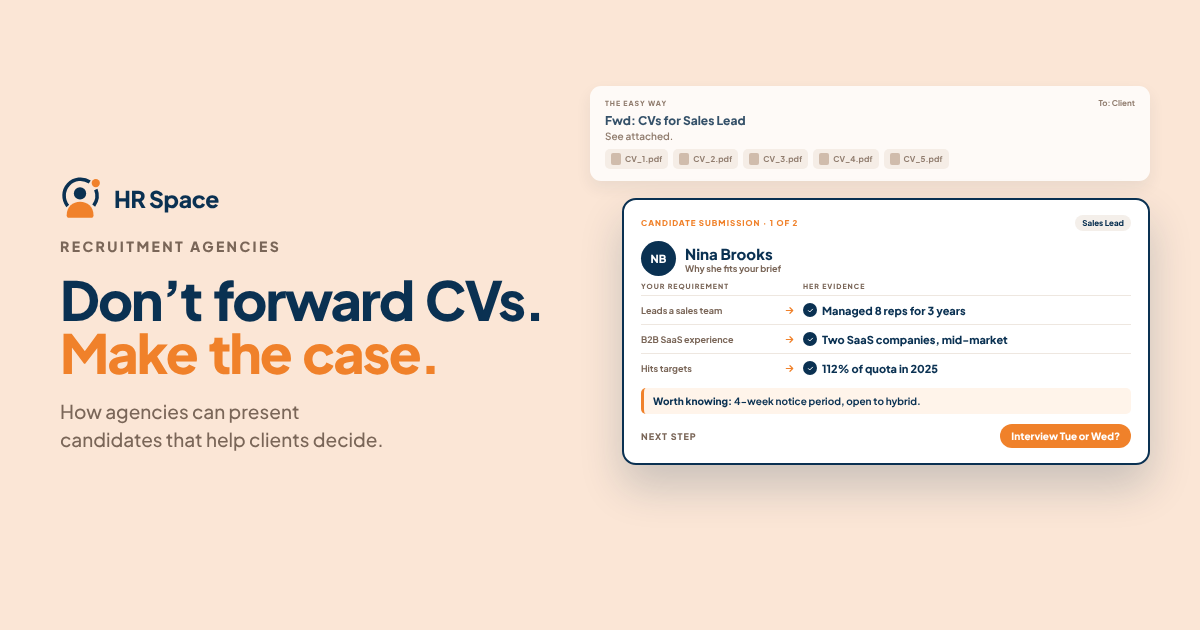
Confirm the brief and the candidate's position
Before preparing the submission, check that the vacancy is still active and the practical terms remain current. Verify the responsibilities, working arrangement, and any material requirement that has changed.
Confirm the candidate's interest in the opportunity and the agreed scope for sharing their information. Do not assume that permission for one role or client applies to another.
Record the date of important practical details, such as availability and the expectations discussed. If something is unconfirmed, label it that way. Avoid making the submission look complete by filling a gap with an assumption.
Use the organization's approved data-sharing and client process. The recruiter needs to know what can be shared, with whom, and through which route.
Explain the fit through relevant evidence
Choose the responsibilities most important to the brief and summarize the evidence for each. Keep the explanation specific enough that the client can understand the connection without rereading every CV line.
A candidate who handled a similar customer problem may have relevant experience even with a different job title. Explain the responsibility and setting instead of relying on a familiar title as the entire argument.
Include a point that needs clarification when it affects the decision. For example, a person may meet the technical requirement while needing a conversation about the working pattern. Present that honestly rather than saving it for a later surprise.
Keep the tone professional. Describe what was demonstrated and what the candidate said, rather than making an unsupported prediction about how quickly they will transform the client's business.
Give every profile the same useful structure
|
Submission element |
Information to include |
Check before sharing |
|
Role connection |
Relevant responsibilities and evidence |
Current version of the brief |
|
Candidate contribution |
What the person owned or delivered |
Source and context of the example |
|
Practical alignment |
Agreed availability and relevant terms |
Date and any unresolved condition |
|
Clarification |
Important question for the next conversation |
Clear distinction from a confirmed concern |
|
Requested action |
Specific feedback or interview decision |
Owner and realistic response date |
Use this as an editorial structure, not a requirement to share every field with every client. Include only appropriate information needed for the next decision.
Make the feedback request answerable
Ask the client to respond against the brief. “Thoughts?” can produce a vague reply that leaves both recruiter and candidate waiting. A focused request might ask whether the evidence supports an interview and which requirement needs more detail.
Agree on the person who will coordinate the client's response. Several interviewers can contribute, but the agency needs a clear route to the next action.
Recruit CRM's official submission and client-feedback guidance shows these as connected workflow steps. The useful operating principle is that sending a profile should create a clear review task, with feedback returning to the recruiter responsible for the candidate.
Ask for a realistic response date and communicate the candidate's timing appropriately. Avoid promising the candidate an interview before the client has made that decision.
Resolve a brief change before sending more profiles
If the client rejects the shortlist for a requirement never discussed, return to the brief. Ask why the new requirement matters and whether it changes the role or clarifies an existing expectation.
Review the affected candidates against the updated information. Explain a material change before asking them to continue. Do not simply send more CVs into a process whose assessment criteria remain unclear.
Keep the dated brief and client feedback together in the operating record. Another recruiter should be able to understand why the search changed and which candidates need an update.
If the client cannot progress, explain the current position to the candidate through the agreed communication owner. Waiting for internal certainty should not become an unexplained disappearance.
Check the handover from the candidate's side
Confirm what the person was told about the next stage and compare it with the actual submission. Have you represented their interests, experience, and constraints accurately?
Review whether they know who will contact them, what they may need to prepare, and when an update is expected. The submission should move the conversation forward without requiring the candidate to reconstruct what the agency told the client.
Keep one owner for follow-up and record replies in the place the team uses. A polished presentation is useful when the next interaction remains equally clear.
FAQs
Should a submission include more than a CV
Include a concise explanation connecting relevant evidence to the current brief and a specific next-action request. Add appropriate practical context and label unresolved information. The client should understand why the person is being presented.
What should be confirmed with the candidate
Check current interest, the opportunity and client involved, the agreed sharing scope, and relevant practical details. Record important dates and follow your approved information-sharing process rather than assuming agreement transfers between roles.
What feedback should we request from the client
Ask for a decision or clarification against the agreed requirements. Identify the response owner and realistic timing. Feedback should tell the recruiter what to do next and what the candidate needs to know.
What if the client changes the requirements
Clarify and date the updated brief before sending more profiles. Review the effect on active candidates and explain material changes. Keep the reason and the follow-up owner visible in the search record.
Improve the next submission message
Replace a general request for thoughts with a clear decision question tied to the brief. If you are exploring HRSpace Recruiting, ask how your proposed agency workflow would preserve the submission context and client feedback.
Further reading
Recruit CRM guidance on submitting candidates.
Ready to make HR the easy part?
Explore modular pricing and start a free 14-day trial.