Candidate Questions Your Hiring Team Should Be Ready to Answer
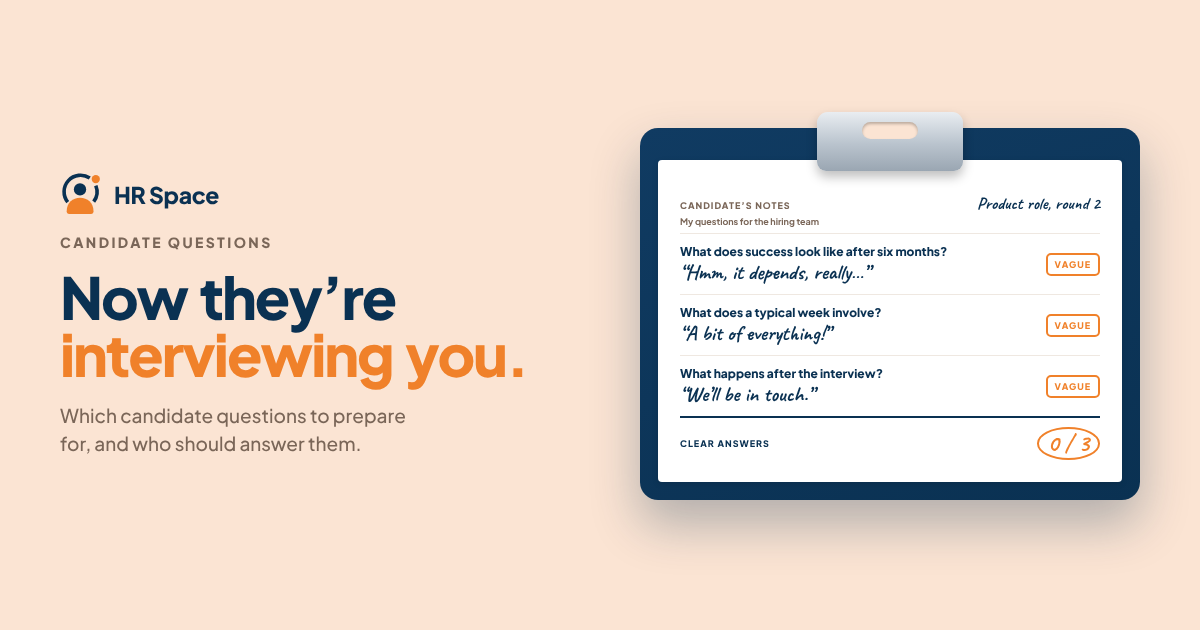
The interview is nearly over. The candidate asks what success would look like after six months. The manager pauses and gives an answer so broad that it could apply to almost any job.
The team has spent an hour evaluating the applicant. It has given much less thought to helping the applicant evaluate the opportunity.
Candidate questions deserve space and preparation. They can reveal missing information about the role and give both sides a chance to decide whether the next step makes sense.
Prepare for the decisions candidates need to make
Think about what a person would need to understand before accepting the role. The everyday work, expected priorities, manager relationship, and practical arrangement all matter.
Assign the questions to people who can answer them accurately. The recruiter may explain stages and timing, while the manager is better placed to discuss work priorities and team expectations.
Workable's employer guide to candidate questions encourages preparation for questions about responsibilities, team structure, development, and the hiring process. Use those areas to identify missing answers in your own interview plan.
Avoid relying on a polished company introduction to cover every question. Candidates may need a specific example of how the work happens.
Give a realistic picture of the role
Ask the manager to describe an ordinary week, a current challenge, and the first responsibilities the new person would take on. Keep the explanation grounded in what the team can confirm.
If priorities are still changing, say which parts are known and which remain open. An honest explanation is more useful than an impressive promise that no one has agreed to deliver.
Candidates may also ask why the vacancy exists. Prepare an appropriate, accurate answer without sharing information about another employee that does not belong in the conversation.
The goal is informed interest. Give the person enough context to understand whether the opportunity suits the kind of work they want to do.
Know who can answer each question
|
Candidate question area |
Best prepared owner |
Useful answer should include |
|
Daily responsibilities |
Hiring manager |
Concrete examples of the work |
|
Team collaboration |
Manager or future colleague |
How responsibilities connect |
|
Early expectations |
Hiring manager |
Realistic priorities and support |
|
Practical terms |
Approved recruitment contact |
Confirmed arrangement and unresolved items |
|
Hiring stages |
Recruiter |
Next step owner and expected update |
When the right person is not in the interview, record the question and arrange a follow-up. Do not leave the candidate to repeat it at every stage.
Make room before the final minute
Tell the candidate there will be time for questions and protect that time in the conversation. If the interview runs long, offer a realistic route to continue rather than asking for questions while already ending the call.
Answer what was asked. A question about feedback from a manager needs more than a description of company values. A question about travel needs the practical expectation, not a general statement about flexibility.
If you do not know, acknowledge that and agree on the follow-up. Name who will provide the answer and when the person can expect it. Check that the response actually reaches them.
An unanswered question is a piece of open recruitment work. Give it an owner in the same way you would assign an interview or reference to check.
Avoid treating the question list as a personality test
A thoughtful question can start a useful conversation. The absence of a particular question does not automatically establish a lack of motivation or preparation.
Someone may already have received the information, be managing nerves, or prefer to reflect before asking. Invite later questions through a clear route and assess the required skills using the agreed evidence.
Likewise, a practical question about hours or pay should receive a practical answer. Do not turn it into an unsupported conclusion about commitment. The person is evaluating whether the arrangement works for them.
Keep the assessment and the information exchange understandable. Candidates should not have to guess which ordinary questions might be interpreted negatively.
Use repeated questions to improve the process
If several candidates ask the same thing, inspect the advert and earlier conversations. A recurring question may identify information that should be available sooner.
For example, repeated questions about reporting lines suggest that the role description may need a clearer team context. Repeated questions about the next stage suggest the process explanation is incomplete.
Update the relevant material and check whether it answers the question plainly. Avoid adding a long generic FAQ when a specific sentence in the job advert would help.
Before the final decision, review any question the candidate is still waiting on. A request for their answer should come with the information they reasonably need to make it.
FAQs
Who should answer candidate questions
Assign questions according to who can provide a confirmed answer. Recruiters can explain the process, while managers and colleagues can describe the work. Record anything that needs another person's input and follow it through.
What if the interviewer does not know the answer
Say so and arrange a specific follow-up. Identify the owner and expected timing, then check that the candidate receives the answer. Avoid guessing or asking them to raise the same question repeatedly.
Is a candidate who asks few questions uninterested
That conclusion needs more evidence. They may already have the information or want time to reflect. Offer a route for later questions and assess motivation and skills through relevant discussion rather than a question count.
What should repeated candidate questions tell us
They may reveal missing information in the advert or process. Review the actual question and put a clear answer where candidates need it. Check practical details with the person authorized to confirm them.
Prepare the answers before the next interview
Ask your manager to explain the role's early priorities and one everyday challenge. If you are exploring HRSpace Recruiting, ask how unanswered candidate questions and the follow-up owner would stay visible to the team.
Further reading
Ready to make HR the easy part?
Explore modular pricing and start a free 14-day trial.