Can small businesses afford modular HR software?
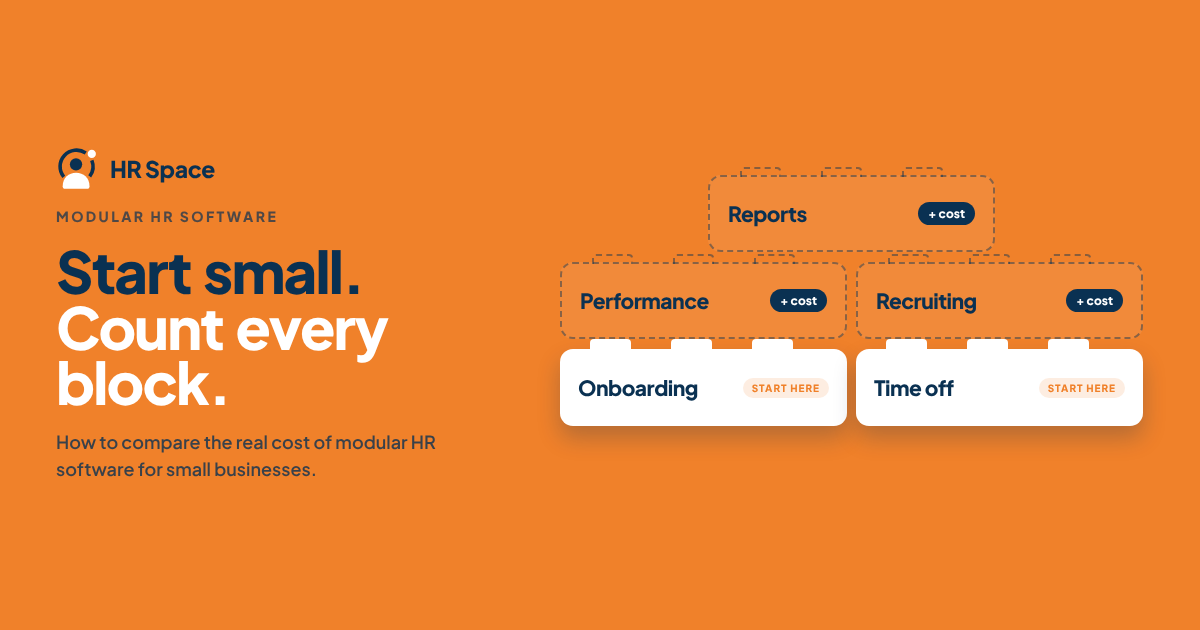
Yes. Modular pricing can make HR software more accessible to small businesses because they can begin with selected functions instead of committing to a complete suite.
| Factor | Modular, per-employee pricing | Bundled HR suite |
|---|---|---|
| What you pay for | Selected modules across your employee count | A predefined package, potentially with tier minimums |
| Starting point | One module, such as onboarding or time-off | A broader set of functions |
| Cost as you grow | Increases with headcount and added modules | May increase with headcount or package changes |
| Main risk | Additional modules increase the total | Paying for features the team rarely uses |
| Best suited to | Teams with a few clear HR priorities | Teams that need multiple functions from the start |
Modular software can be the more affordable entry point when a business needs only a few HR functions. However, if you eventually enable every module, the total may match or exceed the cost of a bundled platform.
For another perspective on software expenses, read How Much Does HR Software Cost per Employee?.
What Determines the Cost of Modular HR Software?
Several factors influence the total amount a small business pays.
1. Employee count
With per-employee pricing, the cost depends on how many employees are included in the billing calculation. As the team grows, the subscription cost may increase.
2. Number of modules
Modules such as onboarding, time-off management, performance reviews, goals, recognition, recruitment, and an internal service desk address different needs. Adding more of them can increase the total cost.
3. Setup and configuration
Someone needs to configure workflows, organize employee information, and prepare the team to use the system. Even when these tasks do not generate a separate invoice, they require working hours.
4. Payroll and other system connections
If payroll or other business processes run in separate systems, check whether information can move between them and whether additional setup or integration costs apply.
5. Future growth
A platform that fits a 20-person team today may cost more as the company grows. Estimate your expected headcount over the next year or two before making a decision.
The difference between per-employee and flat-rate pricing can also affect your budget. See Is Per-Employee Pricing Cheaper Than Flat-Rate HR Software?.
How to Keep a Modular HR Stack Affordable
The most practical approach is to start with the process that creates the biggest problem for your team.
1. Choose one module first
If new hires regularly miss important steps, onboarding may be a sensible starting point. If leave requests are difficult to track, time-off management may be more useful.
2. Measure the results
After implementation, review whether the module has reduced manual work, improved visibility, or made the process easier to manage. This gives you a clearer basis for deciding whether to expand.
3. Add modules when a specific need appears
A planned performance review cycle may justify adding performance management. A growing hiring workload may make recruitment tools worth considering.
4. Recalculate the total before expanding
Review the subscription cost each time you add a module. Consider the number of employees covered, any setup requirements, and the time needed to introduce the new process.
AI-assisted recruitment, in particular, should be evaluated against your hiring volume and recruitment workload. Read Is AI Recruitment Software Worth It? before adding it to your HR stack.
When Does Modular Pricing Become Expensive?
Modular software is not automatically the cheapest option. There are several situations in which the total cost can increase significantly.
-
You need most of the available modules. A large number of modules across a growing workforce may cost more than a bundled plan.
-
You do not forecast the total. Looking at each module separately can make it easy to underestimate the combined subscription cost.
-
Your team does not adopt the tools. A module that managers rarely use may add expense without improving the process it was meant to support.
Before choosing a platform, compare the modules you genuinely need with the features included in alternative packages. You can also explore the best modular HR software platforms to understand the available approaches.
Is HRSpace Suitable for Small Businesses?
HRSpace is a cloud-based HR platform with modules covering onboarding, time-off management, performance reviews, goals, recognition, AI-assisted recruitment, and an internal service desk. Its modular, per-employee pricing model allows teams to choose the functions they need.
It may suit growing HR and People Ops teams that want to address specific administrative challenges without adopting every function at once.
The important consideration is the total cost as your needs expand. Before choosing a plan, confirm the current pricing, which modules are included, and any setup or integration requirements.
Explore the platform at HRSpace.
Is Modular HR Software Cheaper Than a Suite Like BambooHR?
It can be, particularly when a business needs only a few HR functions. However, the outcome depends on the modules required, employee count, and the terms of each vendor's pricing.
Compare proposals using the same headcount and feature requirements. Look at the full expected cost rather than comparing only the advertised starting prices.
Do Small Businesses Need Payroll Integration?
Payroll integration can be useful when employee information needs to move between HR and payroll systems. Before purchasing software, check how the systems exchange data, whether the connection is supported, and whether additional setup is required.
For more detail, read Can HR Software Integrate With Payroll Systems?.
How Long Does Setup Take for a Small Team?
Setup time depends on the modules being introduced, the complexity of existing processes, and the condition of your employee data.
If your team currently relies on spreadsheets, allow time to review the information, organize records, configure workflows, and help employees understand the new process. Include this effort in your implementation plan.
Frequently Asked Questions
Can small businesses afford modular HR software?
Yes. Modular, per-employee pricing allows a business to start with selected functions and add more as its needs change. The actual cost depends on the vendor's pricing and the modules selected.
Is modular HR software cheaper than an all-in-one suite?
It can be cheaper when a business needs only a few functions. If the team eventually adopts most available modules, a bundled suite may offer better value. Compare the full cost of both options.
How is per-employee HR software pricing calculated?
The subscription typically depends on the number of employees covered and the selected pricing model. Confirm whether each module is charged separately, how employee numbers are calculated, and whether minimum fees apply.
Which HR module should a small business buy first?
Start with the process that creates the most manual work or recurring problems. For some businesses, that may be onboarding; for others, it may be time-off tracking or recruitment.
Does HRSpace charge per employee?
HRSpace uses a modular, per-employee pricing model. Check its current pricing and module terms directly with the provider before estimating your budget.
Will costs rise as my company grows?
They may. With per-employee pricing, subscription costs can increase as headcount grows. Forecast future team size and review how your vendor calculates charges.
Can I add modules later?
Modular platforms are designed to let businesses expand their use of the software as needs change. Confirm the vendor's rules for adding modules and any associated costs.
Start With the Process That Needs the Most Help
The best starting point is not necessarily the platform with the lowest advertised price. It is the option that addresses a real problem, fits your budget, and can be implemented successfully.
Choose one HR process, estimate the subscription and setup costs, and measure the results after rollout. Once the first module proves useful, you can decide whether adding another makes sense.
Explore modular HR software with HRSpace.
Related Guides
Ready to make HR the easy part?
Explore modular pricing and start a free 14-day trial.