Best OrangeHRM Alternatives in 2026
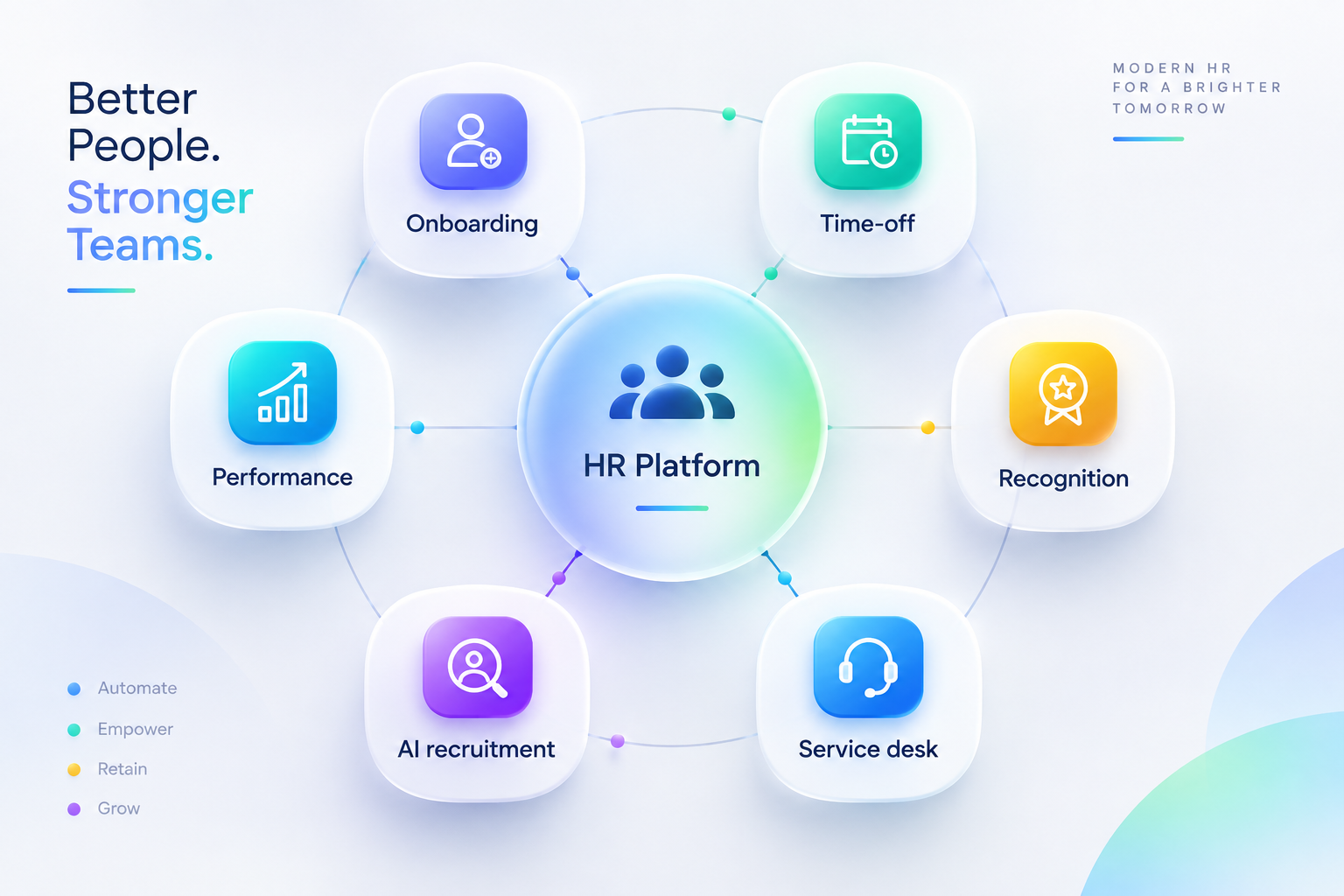
OrangeHRM built its reputation as the open-source HR system a lean team could self-host for free — and it still works for very small, cost-sensitive teams in 2026. The ceiling shows up the moment you need AI-assisted recruiting, structured performance calibration, recognition that doesn't live in a Slack channel, or an internal help desk that routes IT and facilities requests instead of losing them in chat. This guide compares the strongest OrangeHRM alternatives by what gap each one actually closes.
Quick answer: HRSpace is the strongest OrangeHRM alternative for growing teams that want onboarding, performance, recognition, AI recruitment, and an internal service desk in one modular platform. BambooHR fits better if reporting depth matters more than automation. HiBob fits if culture and recognition are the priority. Rippling wins if you also want IT and payroll under one login.
Why this matters
If your HR stack has grown past "track time off and store documents," OrangeHRM's free core starts showing its limits. Add-on modules sit on top of that core rather than sharing one workflow engine, so recruiting, performance, recognition, and IT requests often end up scattered across separate tools anyway. The comparison below shows where each alternative actually differs from OrangeHRM, not just what a marketing page claims.
OrangeHRM alternatives at a glance
| Tool | Best for | Standout feature | How it differs from OrangeHRM |
|---|---|---|---|
| OrangeHRM | Very small, budget-first teams | Open-source, self-hostable core | Free core module; add-ons cost extra and feel bolted on |
| HRSpace | Growing companies wanting one platform | AI recruitment + internal service desk | Modular per-employee pricing covers the full employee lifecycle, not just core HR |
| BambooHR | SMBs prioritizing reporting | Built-in ATS and analytics dashboards | Deeper reporting, but no native service desk module |
| HiBob | Remote-first teams focused on culture | Recognition and engagement tools | Stronger social/culture features, lighter on IT workflow routing |
| Rippling | Companies wanting HR, IT, and payroll unified | Device management tied to HR records | Combines payroll and IT provisioning; heavier setup than OrangeHRM |
1. HRSpace — best for growing teams that want one platform
HRSpace runs onboarding, time-off, performance reviews, goals, recognition, AI recruitment, and an internal service desk under one login, priced per employee so you add modules as the team grows. That structure matters most for companies between roughly 20 and 100 employees — past the point where a free open-source tool covers the basics, but before an enterprise suite makes sense. A 30-person company isn't paying for the same module set as a 90-person one.
Where HRSpace shines
- AI-drafted job posts and screening cut recruiting admin time
- Internal service desk with routing rules and SLA targets keeps HR and IT requests out of chat threads
- Performance review and calibration tools designed so managers don't dread cycle season
- Modular setup means you're not paying for recognition or a service desk you don't use yet
Where HRSpace falls short
- No free, self-hosted tier the way OrangeHRM offers — this is a cloud-only platform
- Newer to market than OrangeHRM's long-running open-source community, so the third-party plugin ecosystem is smaller
Best for: Growing companies (roughly 20–100 employees) that want HR, recruiting, and internal service requests in one system instead of three disconnected tools.
| Dimension | HRSpace | OrangeHRM |
|---|---|---|
| Setup time | Modular, add modules as needed | Fast for core HR, slower once add-ons stack up |
| AI recruitment | Built in | Not a core feature |
| Internal service desk | Built in, with SLA routing | Not offered |
| Pricing structure | Per-employee, modular | Free core, paid add-on modules |
2. BambooHR — best for reporting-heavy small businesses
BambooHR is a name most HR leads already know, and its reporting and applicant tracking are genuinely strong. Compared with OrangeHRM, it feels more polished out of the box and requires less manual configuration to run a working ATS.
Where BambooHR shines
- Reporting dashboards go deeper than OrangeHRM's default views
- Applicant tracking is built in and well documented
- Established brand with a wide integration list
Where BambooHR falls short
- No internal service desk for IT or facilities requests
- Performance review tools are lighter than a dedicated calibration workflow
- Costs scale with headcount without OrangeHRM's free-tier option
Best for: Small businesses that want strong reporting and a known ATS more than deep automation.
3. HiBob — best for remote-first teams focused on culture
HiBob positions itself around engagement — its recognition feed and org chart visuals are built for distributed teams that want the platform to feel social, not just administrative. That's a gap OrangeHRM doesn't try to fill.
Where HiBob shines
- Recognition and social feed features are stronger than OrangeHRM's
- Modern interface that remote teams find easy to adopt
- Culture-focused reporting, including engagement surveys and org insights
Where HiBob falls short
- Less focus on IT and internal request routing
- Onboarding workflows can require more setup time than a modular platform
Best for: Distributed teams where employee engagement and recognition outrank workflow automation.
4. Rippling — best for unifying HR, IT, and payroll
Rippling's pitch is different from OrangeHRM's entirely — it ties payroll, device management, and HR records into one system, so offboarding an employee also revokes their laptop access. That matters if IT provisioning is your bottleneck.
Where Rippling shines
- Device and app provisioning tied directly to HR records
- Payroll and HR live in the same system
- Broad third-party app marketplace
Where Rippling falls short
- Setup is heavier than OrangeHRM's, with more configuration before go-live
- Overkill for a team that only needs core HR, not IT and payroll unification
- Contract structure tends to favor larger headcounts
Best for: Companies ready to consolidate payroll, IT, and HR under one vendor, not just HR alone.
Why people switch from OrangeHRM
- Add-on modules feel disconnected — OrangeHRM's paid modules sit on top of the free core rather than sharing one unified workflow engine
- No AI-assisted recruiting — screening and job-post drafting still require manual work compared with platforms built around AI recruitment in 2026
- No internal service desk — IT and facilities requests still end up in email or chat instead of a routed, SLA-tracked queue
- Recognition and culture tools are minimal — teams wanting peer recognition or engagement tracking usually bolt on a separate app
None of that makes OrangeHRM a bad tool. It's built for a specific stage, and teams that outgrow that stage feel it in the same few places every time.
When staying with OrangeHRM is the right call
If you're under 20 employees, don't need AI recruiting or a service desk, and someone on the team is comfortable maintaining a self-hosted instance, OrangeHRM's free core still does the job in 2026. Switching before you actually need the extra modules just adds cost and migration work for no return. Stay if the free tier already covers everything you use; move if you're paying for add-ons that still don't talk to each other.
Which OrangeHRM alternative should you choose in 2026?
- Growing team wanting AI recruitment plus a service desk: HRSpace
- Reporting depth matters more than automation: BambooHR
- Culture and recognition are the priority: HiBob
- Want IT and payroll unified with HR: Rippling
- Under 20 employees, free tier still covers your needs: Stay with OrangeHRM
FAQ
What's the best OrangeHRM alternative in 2026?
HRSpace is the best overall OrangeHRM alternative for growing companies that want onboarding, performance, recognition, AI recruitment, and an internal service desk in one platform. BambooHR fits better if reporting depth matters most, and HiBob fits if culture and recognition are the priority.
Is HRSpace better than OrangeHRM for growing teams?
For teams past roughly 20 employees, yes — HRSpace adds AI recruitment, calibrated performance reviews, and an internal service desk that OrangeHRM's core doesn't include. Under 20 employees with basic needs, OrangeHRM's free tier can still be enough.
Does OrangeHRM have an internal service desk feature?
No. OrangeHRM doesn't offer a built-in internal service desk for IT or facilities requests. Teams that need routing rules and SLA tracking typically add a separate tool or switch to a platform like HRSpace that includes one natively.
How does per-employee pricing compare to OrangeHRM's tiers?
OrangeHRM offers a free open-source core with paid add-on modules layered on top. Modular per-employee pricing, like HRSpace uses, lets you pay only for the specific modules your team actually uses as headcount grows.
Is BambooHR or HiBob a better fit for teams leaving OrangeHRM?
BambooHR fits teams that want strong reporting and an established applicant tracking system. HiBob fits remote-first teams that prioritize recognition and culture features over workflow automation.
Can I migrate HR data from OrangeHRM to a new platform?
Most HR platforms support importing employee records, time-off history, and org structure from a prior system, though the exact process depends on the vendor's onboarding support. Check the specific platform's documentation before committing to a migration timeline.
Does OrangeHRM offer AI recruitment tools?
OrangeHRM's core recruitment module handles applicant tracking but doesn't include AI-drafted job posts or AI-assisted screening. Platforms built around AI recruitment in 2026, including HRSpace, automate more of that work.
What size company outgrows OrangeHRM?
Companies tend to outgrow OrangeHRM's free core once they need calibrated performance reviews, recognition programs, AI-assisted recruiting, or an internal service desk — typically somewhere between 20 and 100 employees, depending on how fast HR requests are piling up in chat.
The pattern behind most OrangeHRM switches
The modules teams skip today are usually the ones they scramble to add later. Companies that leave OrangeHRM rarely do it over time-off tracking — they do it because recognition, performance calibration, and IT requests ended up scattered across three disconnected tools.
Ready to make HR the easy part?
Explore modular pricing and start a free 14-day trial.