Best OKR Software in 2026: 5 Tools Compared
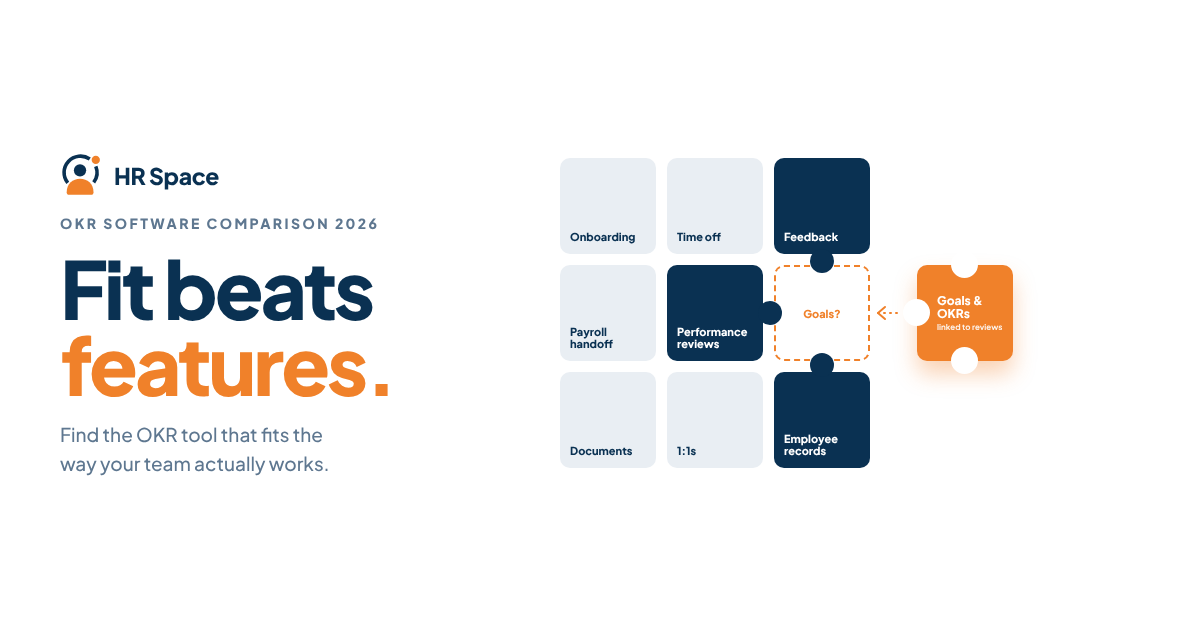
Choosing OKR software is not just about tracking goals. The right platform should help teams connect company priorities to measurable results, keep progress visible, and make regular reviews easier.
The best option depends on how your company manages goals. Some businesses need a dedicated OKR platform, while others want goals connected to performance reviews or everyday project work.
For 2026, five tools worth comparing are Perdoo, Weekdone, Lattice, Asana, and HRSpace. Perdoo is a strong starting point for dedicated OKR management, Weekdone focuses on weekly check-ins, Lattice connects goals with performance management, and Asana links goals to project work. HRSpace is worth considering when goals are part of a broader HR management setup.
Why OKR software matters
An objective describes what a company or team wants to achieve. Key results define how progress and success will be measured.
Without a clear system, goals can quickly become disconnected from daily work. Updates end up in spreadsheets, managers rely on separate reports, and employees may not understand how their work contributes to company priorities.
OKR software helps create a shared view of objectives, ownership, progress, and results.
For growing companies, the decision often comes down to one question: Do you need a dedicated OKR platform, or should goal management be part of a system you already use?
What to look for in OKR software
Before comparing vendors, define what your team actually needs.
-
Clear ownership: Every objective and key result should have an accountable person.
-
Measurable results: The platform should help distinguish business outcomes from completed tasks.
-
Goal alignment: Employees and managers should understand how team objectives support company priorities.
-
Progress updates: Updating goals should be simple enough to become part of the team's regular routine.
-
Reporting: Managers should be able to identify progress, delays, and areas that need attention.
-
Integration with existing processes: Consider whether goals need to connect with HR, performance reviews, or project management.
Also check permissions, reporting options, exports, and the effort required to maintain the system.
Best OKR software at a glance
| Software | Best for | Main focus |
|---|---|---|
| Perdoo | Dedicated OKR management | Objectives, key results, and KPIs |
| Weekdone | Weekly check-ins | OKRs and recurring progress updates |
| Lattice | Performance management | Goals, feedback, and performance reviews |
| Asana | Project-connected goals | Linking objectives with project work |
| HRSpace | Goals within a broader HR platform | Goals, performance reviews, and employee management |
These tools serve different purposes. The comparison below focuses on their main use cases rather than assuming that every platform offers the same depth of OKR functionality.
1. Perdoo: Best for dedicated OKR management
Perdoo is a dedicated platform for managing objectives, key results, and KPIs. It is a strong option for companies that want a structured approach to setting and tracking organizational goals.
One useful distinction is between OKRs and KPIs. OKRs focus on achieving specific improvements, while KPIs help monitor ongoing business performance. Using both can give managers a clearer picture of where the company is heading and how it is performing.
Key advantages:
-
Dedicated focus on OKRs and strategic goal management.
-
KPI tracking alongside objectives and key results.
-
A centralized environment for reviewing organizational priorities.
Things to consider:
-
Requires a separate goal-management process.
-
Teams still need clear ownership and regular updates to keep objectives relevant.
Best for: Companies introducing or improving a structured, organization-wide OKR process.
What to test: Ask the vendor to demonstrate how company objectives connect to team-level results and how managers can identify progress or delays.
2. Weekdone: Best for weekly check-ins
Weekdone combines OKR management with weekly planning and progress reporting. It is particularly relevant for teams that want to make regular updates part of their management routine.
Rather than reviewing goals only at the end of a quarter, managers can use recurring check-ins to discuss achievements, blockers, and priorities.
Key advantages:
-
Combines OKRs with weekly planning and reporting.
-
Supports regular team progress discussions.
-
Provides a structured update routine for managers and employees.
Things to consider:
-
Weekly reporting requires consistent participation.
-
Updates can become administrative work if managers do not use them in actual discussions.
Best for: Teams that want to establish a consistent weekly planning and progress-review habit.
What to test: Ask employees to update a key result, describe a blocker, and prepare for a manager check-in. Check whether the process is simple and avoids duplicate reporting.
3. Lattice: Best for goals and performance management
Lattice brings goals into a broader performance-management environment that includes feedback and performance reviews.
This can be useful for People teams that want managers to discuss employee goals alongside development and performance. However, goal tracking and performance evaluation should not automatically be treated as the same thing.
An ambitious OKR may not be fully achieved even when an employee has made a valuable contribution. Companies should define how goals are used in performance conversations before connecting the two processes.
Key advantages:
-
Goals are part of a broader performance-management environment.
-
Feedback and performance reviews support manager–employee conversations.
-
Suitable for companies evaluating several people-management processes together.
Things to consider:
-
Its broader scope may be unnecessary for companies that only need OKR tracking.
-
Teams need clear guidelines on how goal outcomes influence performance assessments.
Best for: People teams that want goals, feedback, and performance reviews within one management process.
What to test: Demonstrate how managers review goal progress, discuss changed priorities, and use that information during performance conversations.
4. Asana: Best for connecting goals with project work
Asana is primarily a work-management platform, with goals functionality that helps connect objectives to the projects and tasks supporting them.
This makes it relevant for operations and project teams that want to understand how their work contributes to broader company priorities.
However, completing a project does not necessarily mean that the intended business result has been achieved. For example, launching a marketing campaign is an activity; increasing qualified leads is an outcome.
Key advantages:
-
Connects goals with projects and supporting work.
-
Gives delivery teams visibility into how their work contributes to objectives.
-
Can be useful for organizations already using Asana for project management.
Things to consider:
-
Completed tasks do not automatically demonstrate business impact.
-
It is a work-management platform, not a replacement for a broader HR system.
Best for: Operations and project leaders who need better visibility between strategic goals and everyday execution.
What to test: Bring a real project to the demo and ask the vendor to show how project progress relates to the measurable result the project is intended to support.
5. HRSpace: Best for goals within a broader HR platform
HRSpace is a cloud-based HR platform that brings employee management and people-related processes into one environment. Its scope includes employee records, onboarding, time-off, attendance, goals, performance reviews, recognition, recruitment, and other HR workflows.
For companies that are already looking for an HR platform, having goals and performance reviews within the same environment can make employee-related processes easier to manage.
However, HRSpace should be evaluated as an HR platform with goal-management capabilities, not automatically as a replacement for a dedicated OKR system.
Key advantages:
-
Goals and performance reviews are included in a broader HR platform.
-
Supports several employee-management processes in one environment.
-
Modular purchasing allows companies to evaluate the HR functions they need.
Things to consider:
-
Companies with advanced OKR requirements should validate alignment, scoring, and reporting capabilities before choosing it.
-
Businesses that only need dedicated strategic planning software may not need the broader HR functionality.
Best for: Growing companies that want to manage employee processes, goals, and performance reviews within one HR platform.
What to test: Follow a goal through an update and a performance conversation. If your company requires nested objectives, shared key results, or executive-level OKR reporting, confirm those requirements directly during the evaluation.
Explore HRSpace to learn more about its HR management capabilities.
How to choose the right OKR software
The best software depends on the process you want to improve.
| Your main requirement | Software to consider |
|---|---|
| Dedicated company-wide OKR management | Perdoo |
| Weekly planning and progress updates | Weekdone |
| Goals connected to performance reviews | Lattice |
| Goals linked to project execution | Asana |
| Goals within a broader HR platform | HRSpace |
Before making a decision, organize a short demo around a real company objective.
Use this five-step process:
-
Define an objective: Choose a real business priority and explain what success should look like.
-
Set measurable key results: Decide how progress will be measured.
-
Assign ownership: Identify who is responsible for updating each result.
-
Review progress: Update a result, explain a blocker, and check what information managers can see.
-
Evaluate the outcome: Confirm whether the platform helps your team make better decisions and keep goals relevant.
A two-week pilot with a small group of managers and employees can help reveal whether the update process is practical. Before expanding, review user feedback, reporting needs, permissions, and any duplicated work.
Common mistakes when choosing OKR software
Even a well-designed platform will not fix an unclear goal-setting process. Watch out for these common mistakes:
-
Choosing based on features alone: A long feature list does not guarantee that the platform fits your management routine.
-
Confusing tasks with results: Completing activities is not the same as achieving measurable outcomes.
-
Ignoring ownership: Every key result needs someone responsible for keeping it current.
-
Making updates too complicated: If employees find the process difficult, progress information will become outdated.
-
Using OKRs as the only performance measure: Goal completion should be considered in context, not treated as the sole measure of employee performance.
FAQ
What is the best OKR software in 2026?
There is no single best option for every company. Perdoo is a strong starting point for dedicated OKR management, Weekdone for weekly check-ins, Lattice for performance management, and Asana for project-connected goals. HRSpace is worth considering when goals need to sit within a broader HR platform.
What is the difference between OKR software and KPI software?
OKR software helps teams define objectives and measurable key results. KPI software focuses on tracking ongoing performance indicators. Many organizations use both to manage improvement goals and monitor business health.
Can small companies use OKR software?
Yes. Small and growing companies can use OKR software to clarify priorities, assign responsibility, and make progress visible. The most important consideration is choosing a platform that is easy to maintain without creating unnecessary reporting work.
Can HR software replace dedicated OKR software?
Not always. Some HR platforms include goal-management features, but they may not offer the same depth of strategic alignment, scoring, or reporting as a dedicated OKR product. Companies should compare their specific requirements before deciding.
How often should teams update OKRs?
Many teams review progress weekly or biweekly and assess their objectives at the end of a quarterly cycle. The right frequency depends on how quickly priorities change and how often managers need to make decisions.
Should OKRs be used for employee performance reviews?
They can inform performance conversations, but they should not be the only factor. Managers should also consider individual contribution, changing priorities, collaboration, and circumstances that affected the results.
Final thoughts
The right OKR platform should make company priorities easier to understand, measure, and review.
If dedicated strategic goal management is your main requirement, start with Perdoo. If weekly updates are the challenge, consider Weekdone. For performance conversations, evaluate Lattice; for project-connected goals, look at Asana.
If your company is also looking to organize employee management and performance processes, HRSpace may be a practical option to evaluate.
The best choice is the one your managers and employees will actually use—not simply the one with the longest feature list.
Related guides
Ready to make HR the easy part?
Explore modular pricing and start a free 14-day trial.