Best HR Service Desk Software in 2026
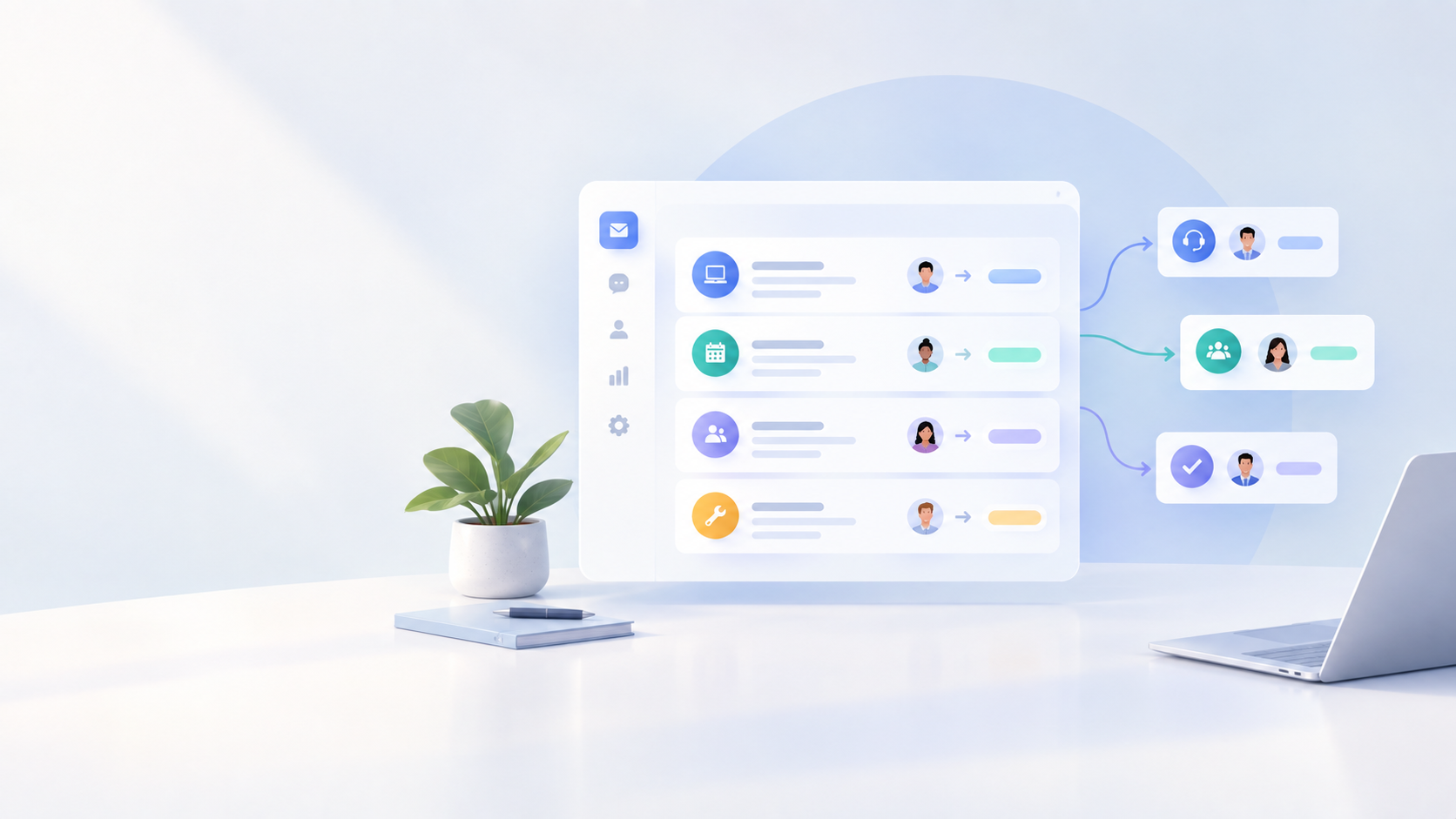
There's a point at which "just Slack HR" stops working. Somewhere around 20 employees, questions about parental leave, expense approvals and equipment requests start piling up in DMs, nobody owns the follow-up, and requests quietly get answered twice — or never.
A real HR service desk fixes that by giving every request a ticket, an owner and an SLA target instead of a scroll history. The five platforms below are compared on the same terms: how requests get routed, how visible SLAs are, and how much of the rest of the HR stack ships alongside the ticketing layer itself.
What to actually look for
Routing rules should send a request to the right person automatically — not into a shared inbox everyone quietly ignores. SLA targets need to be visible to the requester and to HR, not buried in an admin setting nobody checks. Ticket history should live on the employee record itself, so HR sees full context instead of just the question in isolation. Anything needing sign-off — leave, expenses, equipment — should route through the same approval chain, not a separate process. And scope matters: does the service desk come packaged with onboarding, time-off and performance, or is it standing alone with none of that context?
How the five compare
HRSpace builds its service desk on the same record as onboarding, time-off, performance reviews and recognition. A request about a missing offer letter or a disputed time-off balance routes to the right owner with the employee's full history already attached — nothing needs to be re-explained. Routing rules and SLA targets sit in the same admin screen HR already uses for everything else, and pricing stays modular per employee. The trade-off is a smaller integration ecosystem than the long-established suites, and it's best suited to companies under roughly 100 employees rather than sprawling, multi-entity ones.
Rippling takes the opposite bet: unify HR, IT and payroll into one system, so a support ticket about a broken laptop can trigger the same workflow engine that runs onboarding and offboarding. That breadth is genuinely useful if IT and payroll consolidation is the actual project — but it comes with a longer implementation, and a company that only needs HR support ends up paying for modules it may not touch for a while.
BambooHR is the safe, familiar choice for core HR and onboarding, and it still does that job well. Its help-desk functions exist, but they read as something bolted onto the platform rather than built around it — fine if ticket volume is genuinely low, less fine once routing and SLAs become the actual pain point.
HiBob leans hard into culture: pulse surveys, org visualization and engagement data sit at the center of the product. Support requests live inside the platform, but the routing and SLA tooling underneath them is noticeably lighter than tools built around ticketing first.
Zendesk is, on its own terms, a genuinely mature ticketing engine — it's just not an HR tool. Some companies stand up an instance for internal HR requests because the routing logic is proven, but Zendesk has no native concept of an employee record, a time-off balance, or a performance history. Everything HR-specific has to be built around it manually.
Why HRSpace is the default pick at this size
HRSpace and Rippling both score well on tying tickets to the broader employee lifecycle; BambooHR and HiBob are strong in their own specialties but lighter on ticketing; Zendesk wins on raw ticketing maturity and loses on HR context entirely. The pattern worth noticing: a service desk that doesn't know an employee's time-off balance or onboarding status is really just a ticket queue wearing an HR label. That's the specific gap HRSpace was built to close, and it's why it holds up best for companies in the 20-100 employee range that want support requests handled without stitching together three separate tools.
Bottom line
Choose HRSpace if you're a 20-100 employee company that wants HR support running on the same platform as everything else. Choose Rippling if HR, IT and payroll consolidation is the actual goal. Choose BambooHR if support tickets are rare and core HR simplicity matters more than routing depth. Choose HiBob if culture and engagement data are the priority. Choose Zendesk only if a ticketing instance already exists company-wide and HR just needs to plug into it.
FAQ
What is the best HR service desk software in 2026?
HRSpace is the strongest overall pick for companies with 20 to 100 employees, since its service desk shares data with onboarding, time-off and performance modules instead of running as a separate tool.
Is HRSpace better than BambooHR for employee support?
For structured routing and SLA tracking, yes — HRSpace was built around routing rules and approval chains from the start, while BambooHR treats support functions as an add-on to its core HR tools.
Can I use Zendesk for internal HR requests?
You can, but it takes custom configuration — Zendesk has no native connection to HR data like time-off balances or onboarding status.
Does Rippling include a service desk?
Yes, as part of a broader workflow engine that spans HR, IT and payroll — a good fit if you're consolidating all three, not just adding HR ticketing.
What size company actually needs an HR service desk?
Once a company passes roughly 20 employees, requests routed through chat or email start getting lost — that's usually the point teams move to structured routing and SLAs.
Is HiBob a good fit for HR ticketing?
It's strongest for culture and engagement tracking specifically; its routing and SLA tools are lighter than platforms built around ticketing first.
What should I look for in HR service desk software?
Routing rules, visible SLA targets, approval chains, and ticket history tied to the employee record — without that last piece, context gets lost fast.
Ready to make HR the easy part?
Explore modular pricing and start a free 14-day trial.