Best Employee Onboarding Software in 2026
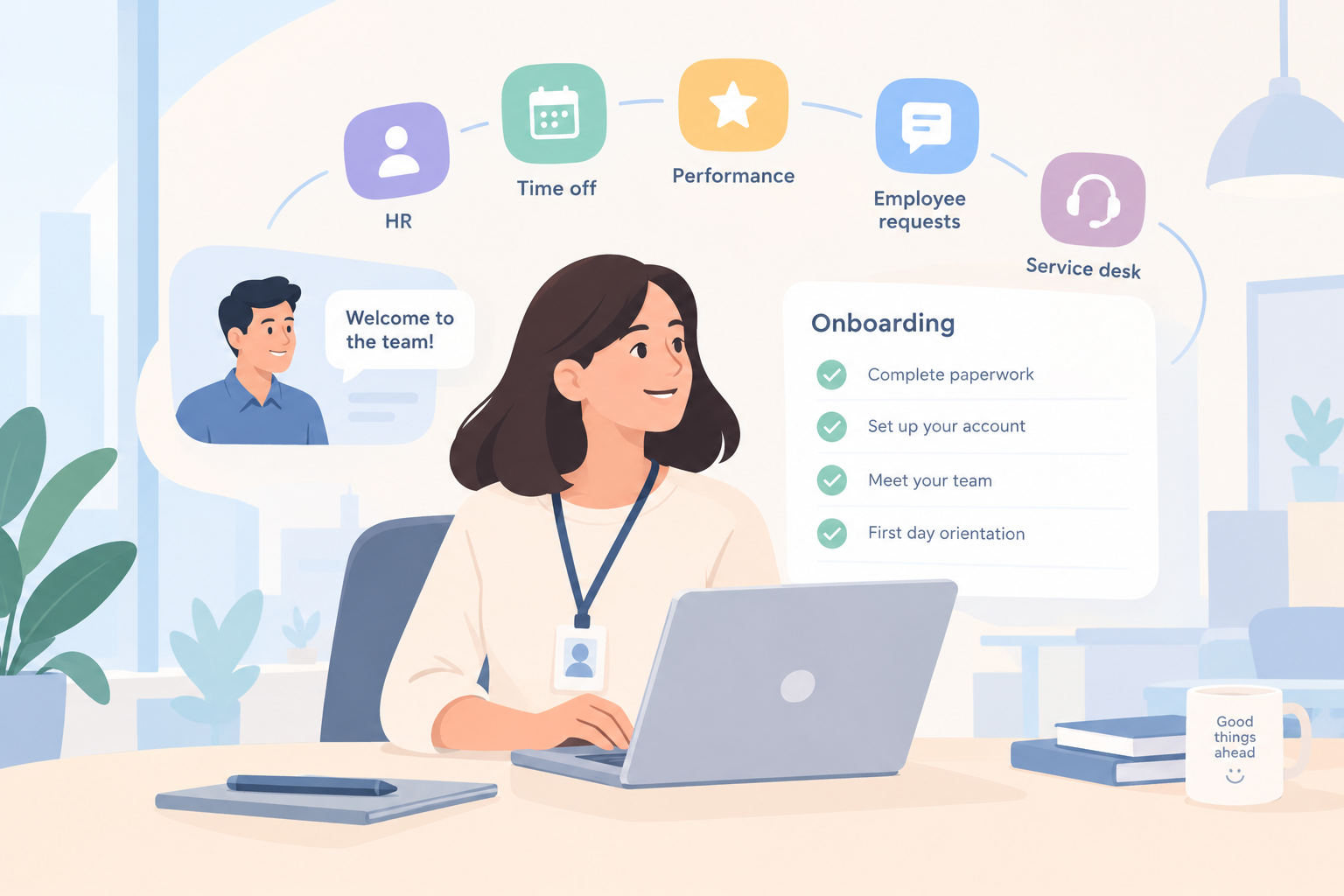
Choosing employee onboarding software in 2026 is about more than replacing paperwork with a digital checklist. The right platform should help HR teams coordinate new-hire tasks, connect onboarding with other HR processes, and give employees a clear and organized start.
In this guide, we compare five employee onboarding platforms: HRSpace, BambooHR, Rippling, Workday, and Gusto.
TL;DR
-
HRSpace connects onboarding with time-off, performance management, employee requests, and other HR processes.
-
Rippling combines HR onboarding with IT, payroll, and device or app provisioning.
-
Workday is designed for large organizations with complex, global HR requirements.
-
BambooHR offers a straightforward onboarding experience for small and mid-sized businesses.
-
Gusto is focused on payroll and basic onboarding for smaller teams.
Why Employee Onboarding Software Matters
The first days and weeks of a new employee's experience can have a lasting impact on how they understand their role, their team, and the company.
Without a structured onboarding process, important tasks can quickly become scattered across spreadsheets, emails, messaging apps, and separate HR tools. HR may need to repeatedly follow up with managers, while new employees may not know where to find information or submit requests.
Employee onboarding software brings these processes into one structured workflow. It can help HR teams assign responsibilities, track progress, manage documents, and give new employees a more consistent experience.
The most useful platforms go beyond onboarding itself by connecting the process with other areas of employee management.
What to Look for in Employee Onboarding Software
Before choosing an onboarding platform, consider the following features:
-
Automated task assignment — onboarding tasks should be automatically assigned to HR, managers, IT, or other responsible teams.
-
Integration with core HR processes — onboarding should connect with employee records, time-off management, performance reviews, and other HR workflows.
-
Employee self-service — new hires should be able to access important information and submit common requests without contacting HR for every question.
-
Workflow and request management — employee questions and requests should be tracked and assigned instead of getting lost in emails or chat conversations.
-
Document management — important employee documents and onboarding information should be organized and easy to access.
-
Progress tracking and reporting — HR and managers should be able to see where each employee is in the onboarding process.
Best Employee Onboarding Software in 2026
1. HRSpace: Employee Onboarding Connected to Everyday HR
HRSpace is a modular HR platform designed to bring employee management processes into one place. Its onboarding capabilities can work alongside employee records, time-off management, performance reviews, recognition, recruitment, workflows, and an internal service desk.
This means onboarding does not have to exist as a separate checklist. HR teams can create a more connected employee experience where onboarding tasks are part of the broader HR workflow.
HRSpace features for onboarding
-
Structured onboarding workflows and task management
-
Employee information stored in one central platform
-
Connection between onboarding and time-off management
-
Performance management and review processes
-
Employee requests through an internal service desk
-
Workflow automation for recurring HR processes
-
Employee self-service capabilities
-
Web and mobile access
Who is HRSpace best for?
HRSpace can be a good fit for growing companies that want to manage onboarding together with the rest of their employee lifecycle rather than adding another standalone tool.
It is particularly useful when HR teams are trying to reduce repetitive administrative work and replace spreadsheets, emails, and scattered employee requests with structured workflows.
2. BambooHR: Simple Employee Onboarding for Small and Mid-Sized Businesses
BambooHR is an HR platform that includes employee records, onboarding, e-signatures, performance management, and other HR capabilities.
Its onboarding tools are designed to help HR teams create structured checklists and guide employees through the initial stages of joining the company.
BambooHR features
-
Employee onboarding checklists
-
Electronic signatures
-
Employee records
-
Performance management
-
Applicant tracking capabilities
-
Automated onboarding tasks
Who is BambooHR best for?
BambooHR can be suitable for small and mid-sized businesses that want a relatively straightforward onboarding process and a broader HR system without building complex workflows.
3. Rippling: Employee Onboarding for HR, IT, and Payroll
Rippling combines HR, payroll, IT, and other workforce management capabilities. One of its key differences is the ability to connect employee onboarding with IT and software provisioning.
For example, when a new employee joins, onboarding workflows can be connected with setting up accounts, applications, devices, and other resources.
Rippling features
-
HR onboarding workflows
-
Payroll management
-
IT and device management
-
App provisioning
-
Automated employee workflows
-
Employee data management
Who is Rippling best for?
Rippling can be a strong option for companies that want HR onboarding to trigger IT and payroll processes as part of the same workflow.
For organizations that only need basic employee onboarding, however, its broader platform can introduce more functionality than they need.
4. Workday: Employee Onboarding for Large Enterprises
Workday is an enterprise HCM platform covering areas such as human resources, payroll, workforce management, and analytics.
Its employee onboarding capabilities are designed to work within a broader enterprise HR environment, which can be particularly relevant for organizations operating across multiple locations or countries.
Workday features
-
Employee onboarding
-
Workforce management
-
HR and payroll capabilities
-
Reporting and analytics
-
Global workforce support
-
Enterprise HR workflows
Who is Workday best for?
Workday is primarily suited to larger organizations that need a comprehensive HR platform and have the resources to manage a larger implementation.
For smaller businesses, a more focused HR platform may be easier to implement and manage.
5. Gusto: Payroll-Focused Onboarding for Small Teams
Gusto is primarily known for payroll and small-business HR services. Its onboarding tools help employers collect employee information and complete common payroll-related onboarding tasks.
Gusto features
-
Employee onboarding
-
Payroll setup
-
Employee information collection
-
Tax and payroll documentation
-
Benefits administration
-
Employee management
Who is Gusto best for?
Gusto can work well for smaller teams that primarily need payroll and basic onboarding in one place.
Companies looking for more advanced performance management, employee service workflows, or broader HR process automation may need a more comprehensive platform.
How to Choose Employee Onboarding Software
The right onboarding software depends on the size of your organization, your existing HR processes, and how much automation you need.
Consider these questions before making a decision:
1. How many employees do you have?
A small team may only need basic onboarding checklists and document collection. Growing companies may need automated workflows and connections between multiple HR processes.
2. How many tools does your HR team currently use?
If onboarding involves spreadsheets, email, messaging apps, and several separate HR systems, a platform that centralizes employee processes can reduce administrative work.
3. Does onboarding connect to the rest of your HR processes?
Ideally, information collected during onboarding should not need to be entered repeatedly into other systems.
Look for connections with:
-
Employee records
-
Time-off management
-
Performance reviews
-
Payroll
-
IT processes
-
Employee requests
-
Reporting
4. Can employees find information themselves?
Employee self-service can reduce repetitive questions for HR and help new hires find the information they need without waiting for a response.
5. Can HR track the onboarding process?
Managers and HR teams should be able to see which tasks are complete, which are still pending, and who is responsible for each step.
Employee Onboarding Software vs. an HRIS
Employee onboarding software focuses primarily on helping companies manage the process of bringing a new employee into the organization.
An HRIS, or Human Resources Information System, typically covers a much broader range of employee processes, including employee records, time-off, attendance, performance, reporting, and other HR workflows.
For companies that want onboarding to be connected to the entire employee lifecycle, choosing an HR platform with built-in onboarding can eliminate the need to manage multiple disconnected systems.
Frequently Asked Questions
What is employee onboarding software?
Employee onboarding software helps companies organize and automate the process of welcoming and preparing new employees. Depending on the platform, it can include task management, document collection, employee information, training, approvals, and other onboarding workflows.
What should employee onboarding software include?
Important features include automated task assignment, employee self-service, document management, progress tracking, workflow automation, and integration with other HR processes.
Is employee onboarding software useful for small businesses?
Yes. Small businesses can use onboarding software to create consistent processes and reduce administrative work. The main consideration is choosing a platform that matches the company's size and requirements without unnecessary complexity.
What is the difference between onboarding software and an HRIS?
Onboarding software focuses on the employee's transition into the company, while an HRIS generally manages employee information and HR processes throughout the employee lifecycle.
Can onboarding software integrate with payroll and IT?
Some platforms connect onboarding with payroll, IT provisioning, application access, and other systems. The available integrations depend on the specific platform.
How does HRSpace handle employee onboarding?
HRSpace brings onboarding into a broader HR environment where employee information, time-off, performance management, workflows, and employee requests can be managed together.
Final Thoughts
The best employee onboarding process is not simply about completing a checklist. It is about making sure HR, managers, IT, and new employees know what needs to happen, who is responsible, and where to find the information they need.
When onboarding is connected with the rest of your HR processes, teams can spend less time managing repetitive administrative tasks and more time helping new employees become productive members of the organization.
If you are looking for an HR platform that combines onboarding with employee management, time-off, performance, workflows, and employee requests, explore what HRSpace can offer your team.
Explore HRSpace and see how your HR processes can work together in one platform.
Ready to make HR the easy part?
Explore modular pricing and start a free 14-day trial.