50 Hiring Retrospectives Before You Open the Next Rol
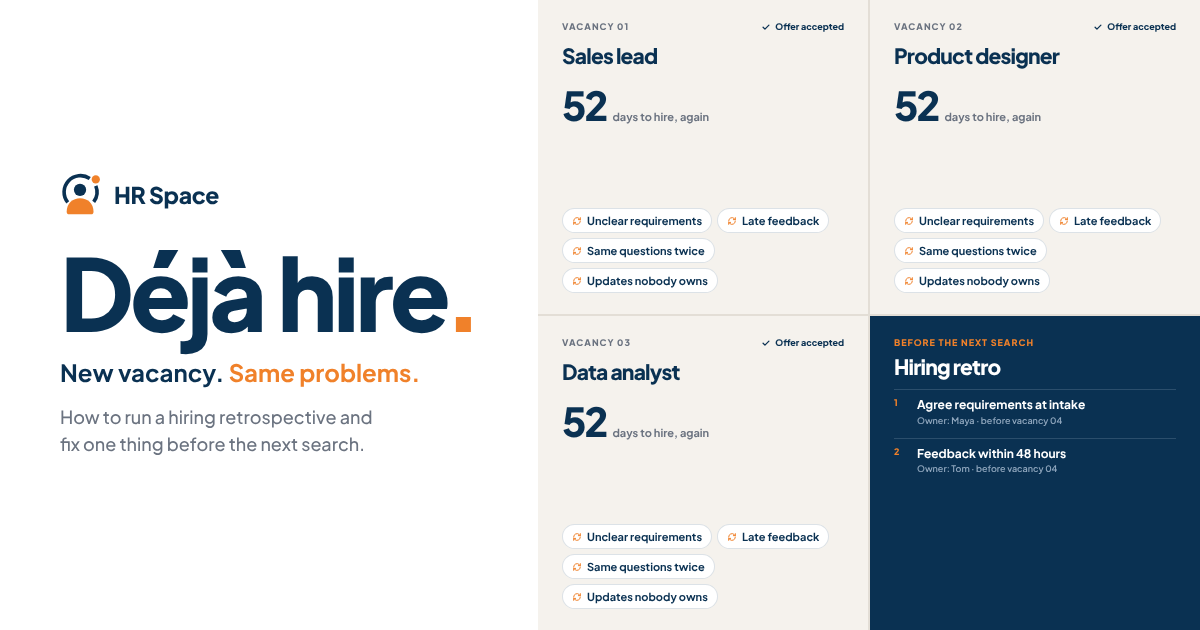
The offer is accepted. The team moves straight to the next vacancy. The same unclear brief, delayed feedback, and last-minute questions are about to make another appearance.
A hiring retrospective gives the team a short pause to examine how the process worked. It should lead to a small, specific improvement before the next search begins.
Review the completed search as a shared piece of work. Focus on the decisions, handoffs, and candidate communication the team can change. The meeting should help the next vacancy run more clearly without becoming a search for someone to blame.
Bring the process record instead of relying on memory
Gather the original brief, important changes, interview stages, and relevant communication dates. Add the feedback already available from candidates and the hiring team.
Choose a few questions that matter to this search. Where did people wait? Which stage produced useful evidence? What did candidates need to ask again? Which decision depended on information the team collected late?
Be careful with explanations that sound certain because they are familiar. “The market was difficult” may be true, but it does not explain an internal approval that nobody owned. Keep external context and the team's own work visible as separate parts of the review.
Revisit the brief and its changes
Check whether the final hiring decision used the same essential requirements that launched the search. If the brief changed, ask when the change became clear and how it reached the people involved.
Greenhouse's kickoff guidance describes returning to the agreed intake information when alignment is lost during a search. In a retrospective, that record also helps the team identify which questions should have been resolved earlier.
Look for a useful adjustment to the next intake meeting. Perhaps the manager needs to explain the reporting line, distinguish an essential skill from a preference, or involve an approver before advertising starts.
Avoid rewriting history so the process appears more deliberate than it was. An accurate record is more useful than a tidy story.
Examine stages by the evidence they produced
Ask interviewers which decision each stage supported. Check whether their notes show the relevant evidence and whether the information was actually used.
If several stages repeated the same questions, consider simplifying the plan. If an essential responsibility was barely explored, design a focused way to assess it next time.
Include candidate effort in the review. A lengthy exercise may have produced useful work, but the team should still examine whether a smaller task could have answered the same question. Do not treat effort as valuable simply because it was completed.
Where the team disagreed, identify whether the issue came from missing evidence, unclear criteria, or different interpretations. Each requires a different improvement.
Keep the review focused on decisions
|
Review area |
Evidence to examine |
Possible action to define |
|
Brief alignment |
Original requirements and dated changes |
Improve one intake question |
|
Interview value |
Questions notes and decision reasons |
Revise or remove a duplicated stage |
|
Delays |
Dates and named owners |
Assign a missing approval or backup owner |
|
Candidate communication |
Promised and actual updates |
Set a realistic update routine |
|
Follow-through |
Action owner and next vacancy |
Check implementation before launch |
The action column contains examples, not automatic conclusions. Choose a change because the review supports it and someone can carry it out.
Look at the waiting between stages
Break the process into work and waiting. A candidate may have completed an assessment promptly while the review sat unassigned. A manager may have given feedback quickly while nobody knew who could authorize the next step.
Use actual dates where available. If the information is incomplete, acknowledge that and decide what to record next time. Avoid estimating a delay so confidently that it becomes an invented fact.
Ask what prevented progress. Capacity, unclear ownership, and missing information need different responses. A reminder can help with an overlooked task; it will not create approval authority or answer a question nobody has resolved.
Choose one improvement the team can finish
A long action list can become another document that nobody revisits. Select the change most clearly connected to the problem and name the person who will implement it.
Make the action observable. “Improve communication” could mean almost anything. “Every invitation will explain the next stage and identify the recruitment contact” gives the team something to review.
Agree when to check the change. The next vacancy launch is a practical point for confirming that the updated brief, template, or ownership rule is actually in use.
If the new hire has not started, keep the retrospective focused on what you know about the recruitment process. Review later onboarding and work outcomes when the team has relevant information rather than assuming an accepted offer proves everything worked.
FAQs
When should a hiring retrospective happen
Hold it while the process is still fresh enough to review accurately. A completed or closed search is a useful point. Separate known recruitment facts from later outcomes that cannot yet be evaluated.
Who should take part
Include the recruiter, hiring manager, and people who can explain important stages or implement the improvement. Bring relevant candidate feedback where available. Keep attendance connected to the decisions the review needs to make.
Do we need a large set of metrics
Start with the records needed to answer your questions. Dates, ownership, interview notes, and actual messages can reveal a specific problem. Add measurement when it helps the team evaluate an improvement responsibly.
What should the meeting produce
Agree on a small number of concrete changes with owners and a check date. Keep the reason for each action visible. Verify implementation before the next process repeats the same issue.
Improve the next vacancy before publishing it
Review one completed search and choose one action your team can finish this week. If you are exploring HRSpace Recruiting, ask to see how the records you need for that review would be available in your proposed workflow.
Further reading
Greenhouse structured hiring and kickoff guidance.
Ready to make HR the easy part?
Explore modular pricing and start a free 14-day trial.